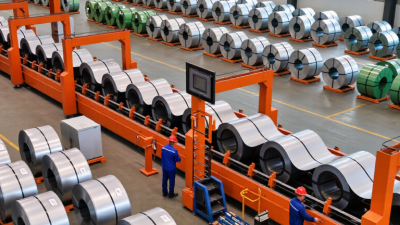
China’s roof-sheet sector draws strength from an enormous steelmaking base, but production scale alone does not prove product quality. The World Steel Association’s World Steel in Figures 2025 reports that China produced 1,005.1 million tonnes of crude steel in 2024. That figure offers useful context. It does not measure coated roofing sheets, factory consistency, or export performance.
For global buyers, the details matter. A sample may look sound under warehouse lights, yet coating thickness, base-metal gauge, profile accuracy, and packaging determine how it performs after shipment. This guide to China’s top 10 roof sheet manufacturers considers product range, documented manufacturing capability, export experience, and the clarity of available specifications. Buyers should still verify certificates, warranties, and current production details directly with each supplier.
One limitation deserves attention: public company data can be uneven, and a polished catalog is not independent proof. A named expert quotation should be checked against a traceable interview or publication before it appears in a buyer’s guide; inventing one would weaken trust. In Roof Sheets Manufacture, careful verification is part of the work. No shortcuts.
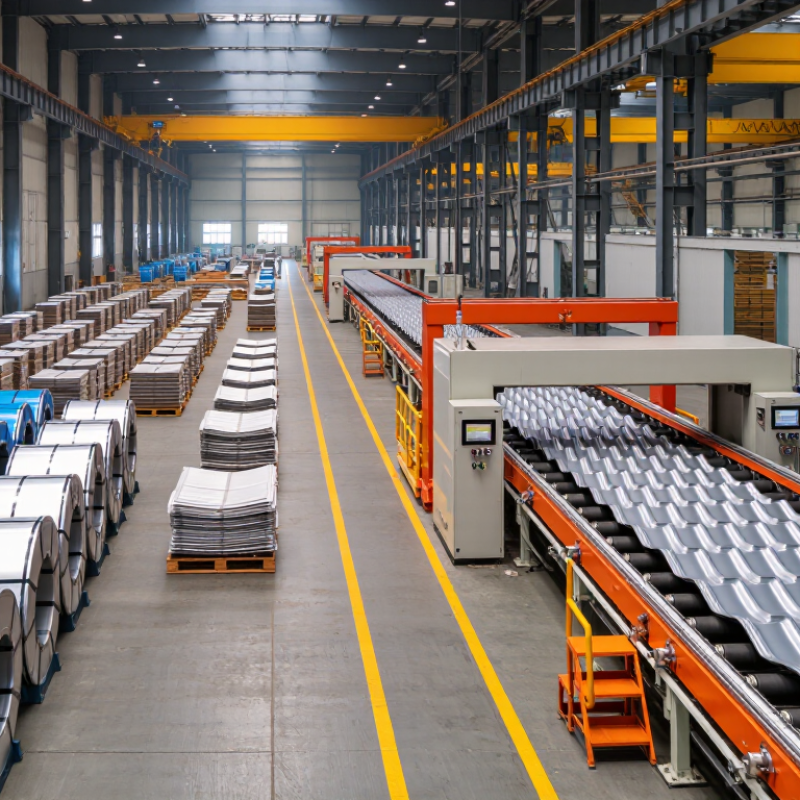
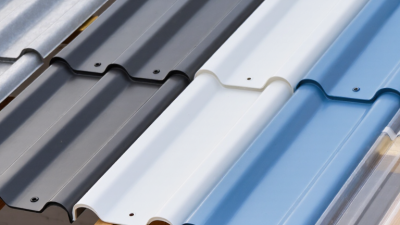
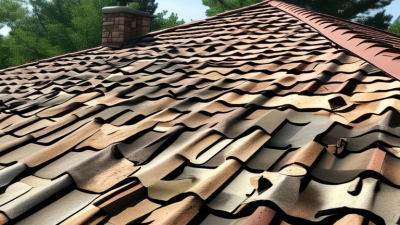
Roof sheets are factory-formed panels that cover buildings and guide rainwater toward gutters. Common materials include coated steel, aluminum, fiber cement, and translucent plastic. Their profiles may be corrugated, trapezoidal, or standing seam, with different levels of stiffness and drainage performance. Raised ribs can help panels span between supports, but they do not replace sound structural design.
Details matter.
Correct fasteners, overlaps, and edge flashings help limit leaks, while suitable coatings can slow corrosion. Roof sheets are used on warehouses, workshops, farm buildings, garages, homes, and outdoor shelters. Translucent panels can bring daylight into work areas, though glare and heat gain may need attention.
Choosing a sheet involves more than comparing material prices. Local rainfall, wind exposure, roof pitch, support spacing, and maintenance access all affect performance. A panel that looks economical on a quote may need extra insulation or careful condensation control once installed.
This is easy to overlook.
In cold or humid conditions, moisture can collect beneath the roof if ventilation and roof layers are poorly planned. Check the manufacturer’s technical data for panel dimensions, coating, load guidance, and compatible fixing methods. Installation quality matters too: even a durable sheet can leak when laps or fasteners are poorly placed.
A neat appearance is useful, but it is not proof of suitability.

How to Evaluate Chinese Roof Sheet Manufacturers
China’s large steel industry offers buyers many options, but capacity alone does not prove quality. World Steel Association’s World Steel in Figures 2024 reports 1,892.2 million tonnes of crude steel production in 2023. That figure describes industry scale, not the quality of any roofing sheet. Evaluate each supplier’s material records and production controls. Ask for the steel grade, base-metal thickness, coating type, and coating mass. Check that test certificates match the quoted product and production batch. A neat sample is useful, but it cannot reveal every issue.
Request measurements from several points across a sheet, including its edges and center. Inspect cut edges, coating uniformity, rib shape, and fit between overlapping panels. Ask how the factory tracks batches and handles rejected material. Independent laboratory tests can help verify composition and coating claims. Salt-spray results may offer clues, but they should not be treated as a direct prediction of service life. Installation, location, and maintenance matter too. I would still verify details with a recent production sample; paperwork can be outdated.
Tips: Compare like with like. Confirm thickness measurement methods, packaging, tolerances, and sample lead times in writing. Keep one approved sample for comparison. Small checks matter.
China’s roof-sheet sector includes mills and fabricators serving industrial sheds, farms, warehouses, and residential projects. These ten manufacturer profiles should compare coating options, base-metal thickness, roll-forming capacity, export packaging, and sample availability—not just quoted price. The World Steel Association reported that China produced 1,019.1 million tonnes of crude steel in 2023 (World Steel in Figures 2024). That scale supports a broad supply base, but it does not prove that every roofing sheet meets a buyer’s specification. Check mill test certificates and coating-weight records.
A practical profile should explain each supplier’s strengths: one may offer custom profiles, another fast production runs, and another careful container loading. Look for clear tolerances, consistent color samples, and photos showing sheet edges and protective film. Ask how the factory handles scratches or profile changes between orders. Details matter. One weakness in many online comparisons is limited evidence of repeat-order consistency; a polished catalogue cannot settle that question.
Tips: Request a small sample and confirm its thickness with a calibrated gauge. Compare the stated coating mass and steel grade against your project specification. Allow time for a trial order—especially when matching colors across separate production batches.
Roof sheet manufacturers differ in more than price. Compare their product range, coating options, thickness tolerances, and production capacity. Some focus on corrugated sheets for warehouses, while others offer standing-seam profiles for commercial roofs. Ask for a current specification sheet and a physical sample. Check the sheet’s stated thickness, coating weight, and finish against your project requirements. Small differences matter. A sample can reveal surface marks or color variation that a catalog photo misses.
Export service is just as important as product choice. Ask how sheets are bundled, protected from moisture, and loaded for long-distance transport. Confirm lead times, minimum order quantities, and which shipping documents the supplier prepares. A responsive export team should explain packing details and flag information still needed from the buyer. Response speed alone is not proof of reliability, though. Request references or records from comparable shipments where available. Details can vary, and I would not rely on a broad “global delivery” claim without checking the route and terms.
Tips: Send the same roof dimensions and coating requirements to every supplier. Compare quotations line by line, including packaging and freight assumptions. Ask who handles a damaged shipment claim. Keep the answer in writing.
Before placing an order, define the roof sheet’s profile, base-metal thickness, material grade, coating, and color. Confirm how thickness is measured; total coated thickness can obscure a thinner steel core. Ask for a current technical data sheet, stated tolerances, and test evidence that matches the product being quoted. “Meets international standards” is not enough without a named standard and relevant test details.
Ask for evidence. Request a physical sample and check its edges, paint finish, profile shape, and dimensions. Compare the sample with the written specification, not just a sales image. Also confirm usable coverage after side laps, sheet lengths, minimum order quantity, production time, and packaging. A small mismatch in coverage can change the number of sheets required.
Clarify who handles pre-shipment inspection, damage claims, and replacement costs. Photos of packed bundles can help, but they do not prove every sheet is consistent. If the order is large, consider an independent inspection before dispatch and confirm which documents the destination market requires. Even careful checks take time, and they cannot remove every risk. That is worth planning for.
| No. | Buyer Check | What to Confirm | Useful Evidence | Practical Warning Sign |
|---|---|---|---|---|
| 1 | Substrate and coating specification | Specify the steel grade, metallic coating type, and coating designation required for the project. For example, EN 10346 covers continuously hot-dip-coated steel flat products; ASTM A653/A653M covers zinc-coated steel sheet, while ASTM A792/A792M covers aluminum-zinc alloy-coated steel sheet. | A signed product datasheet and, where applicable, a material test certificate identifying the applicable standard and coating designation. | The quotation says only “galvanized” or “aluzinc” without a grade, coating designation, or stated standard. |
| 2 | Base-metal thickness | Confirm the required base-metal thickness (BMT), its tolerance, and how it will be measured. Do not assume that a stated overall thickness is the same as BMT, which excludes metallic and paint coatings. | Written thickness specification, tolerance limits, and an agreed inspection method or sampling plan. | The supplier quotes one thickness value but does not clarify whether it is BMT or total coated thickness. |
| 3 | Profile and effective cover width | Check the profile drawing, rib height and spacing, sheet width, and effective cover width after side-lapping. Confirm that the profile is compatible with the roof design and the specified installation details. | Dimensioned cross-section drawing, sample sheet, and written confirmation of profile and dimensional tolerances. | A nominal width is provided without explaining the effective coverage or side-lap arrangement. |
| 4 | Paint system and finish | For pre-painted sheet, specify the coating system, topcoat and back-coat requirements, color reference, and any project-specific performance criteria. EN 10169 is a standard for continuously organic-coated (coil-coated) steel flat products; applicability and required class should be agreed for the project. | Coating-system datasheet, color sample, declared film-thickness requirements, and written warranty terms. | A color name is offered without a defined coating system, inspection criteria, or warranty conditions. |
| 5 | Corrosion environment and service conditions | Tell the supplier the site location, exposure conditions, roof slope, and whether the building is coastal, industrial, agricultural, or subject to condensation. Select the coating and maintenance requirements for the actual environment; ISO 9223 classifies atmospheric corrosivity but does not by itself select a roofing product. | Project specification, exposure information, and documented manufacturer recommendations for the intended application. | A universal service-life claim is made without stating site conditions, installation details, or maintenance assumptions. |
| 6 | Quality management and traceability | Check whether production controls cover incoming coil identification, forming, inspection, packing, and nonconforming products. If ISO 9001 certification is claimed, verify its scope, validity, and issuing certification body. | Current certificate where relevant, sample inspection records, coil or batch identification, and a documented complaint process. | No batch identification is available, or certification documents cannot be matched to the manufacturing site and product scope. |
| 7 | Testing and inspection plan | Agree on the tests, acceptance criteria, sampling frequency, and responsibility for inspection before production. Choose tests relevant to the specified product and standard; do not treat a single accelerated corrosion test as a direct prediction of years of field life. | Approved inspection and test plan, sample reports, and an agreement on whether third-party inspection is required. | Reports are undated, do not identify the tested product or batch, or use acceptance criteria not agreed in the purchase order. |
| 8 | Production capacity and lead time | Confirm the quantity, maximum sheet length, production schedule, order cut-off, and dispatch date. Ask how orders are sequenced and how schedule changes are communicated. | A production schedule tied to the order quantity, delivery destination, and agreed shipment window. | A firm delivery promise is made before dimensions, quantity, raw-material availability, or shipping terms are confirmed. |
| 9 | Packaging, loading, and export documents | Agree on bundle protection, lifting points, container or truck loading, moisture protection, and destination-specific documentation. Confirm the shipping term and which party handles export clearance, freight, insurance, and import charges. | Packing specification, loading plan or photos where agreed, draft commercial invoice and packing list, and clearly stated Incoterms® 2020 rule and named place. | The quotation lists a shipping term without a named place or does not define responsibility for transit damage and documentation. |
| 10 | Order terms, warranty, and change control | Ensure the purchase order states the complete specification, approved samples or drawings, tolerances, quantity, inspection rights, payment milestones, claims process, and warranty exclusions. Require written approval for substitutions or specification changes. | A mutually accepted purchase order and warranty document that identify the product, scope, duration, claim procedure, and applicable conditions. | Key product details are left to verbal agreement, or warranty terms exclude the intended site conditions without prior disclosure. |
Note: Standards and acceptance requirements should be selected for the project and destination market. Confirm the current edition and applicable product requirements before placing an order.