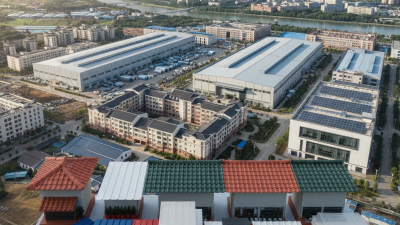
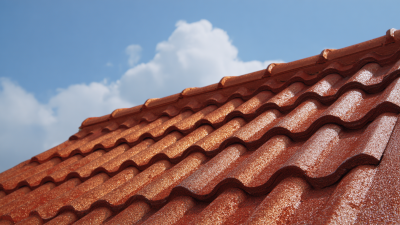
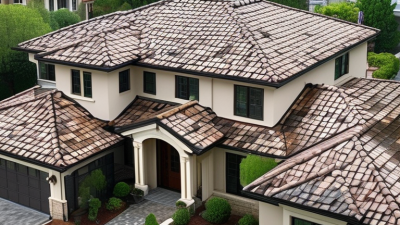
Choosing among China’s top 10 roof sheet manufacturers requires more than comparing prices. Global buyers need evidence, technical understanding, and careful factory evaluation. Roof Sheets Manufacture involves raw material selection, roll-forming accuracy, coating performance, and quality control. These details influence service life under strong sunlight, coastal humidity, heavy rain, and seasonal temperature changes.
Dr. Joseph Lstiburek, a respected building-science expert, stated, “A building enclosure is a system, not a collection of parts.” His observation applies directly to roofing projects. A steel sheet may look impressive, yet poor fasteners, weak flashing, or unsuitable insulation can create leaks. Small details matter.
This guide examines ten Chinese manufacturers through practical buyer concerns. It considers product range, galvanized and galvalume steel options, coating systems, dimensional accuracy, production capacity, testing records, export experience, and after-sales support. Factory audits, sample inspections, and independent laboratory reports should support every serious decision. A polished website is not enough.
Some manufacturers may excel in corrugated sheets, while others focus on standing seam panels, sandwich panels, or stone-coated roofing. Their strengths are not identical. That difference deserves attention.
The ranking may still involve judgment. Product quality can vary between batches, and delivery performance may change with market conditions. Buyers should verify current certificates, thickness tolerances, warranty terms, and packaging methods before signing contracts. This is where many comparisons become incomplete. A reliable supplier should explain both capabilities and limitations clearly. For international projects, that honesty can protect budgets, schedules, and the roof above the people using the building.
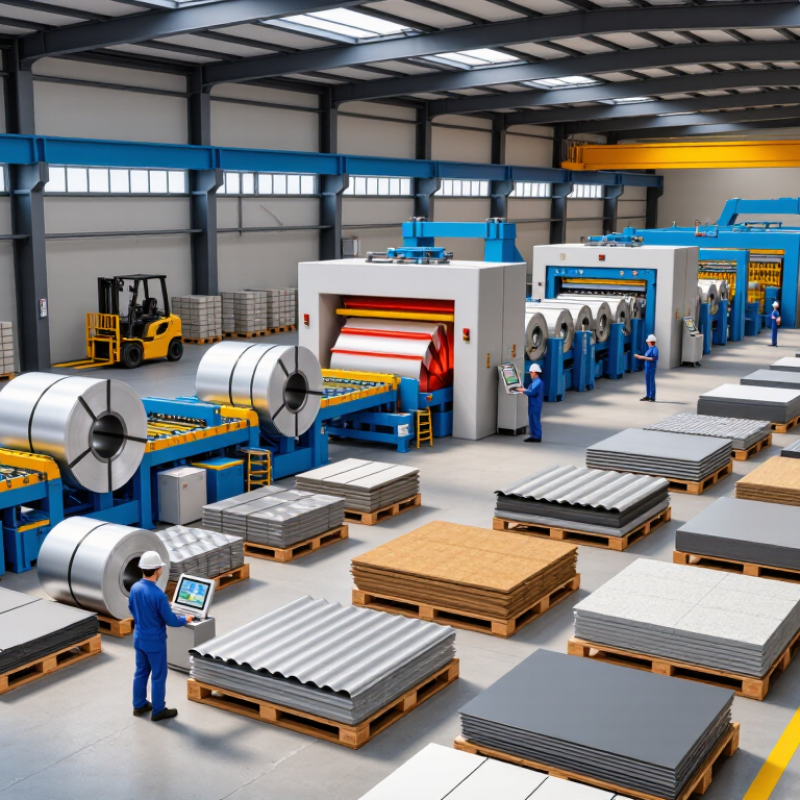
China’s roof sheet market is built around galvanized steel, galvalume steel, prepainted coils, aluminum, and polycarbonate panels. Galvanized sheets suit humid areas and cost-sensitive projects. Galvalume offers stronger corrosion resistance under many roofing conditions. Prepainted steel adds color, but coating quality depends on paint chemistry, curing, and surface preparation.
In 2024, public capacity data showed a very large Chinese steel base, with coated and galvanized production capacity reaching tens of millions of tonnes annually. However, figures vary by source. Some reports count nameplate capacity, while others measure actual output. That difference matters. Buyers should request monthly production records, line widths, thickness ranges, and export inspection reports. A factory may claim high capacity but operate only one coating line.
Standards also require careful checking. Common references include GB/T specifications, ASTM requirements, EN standards, and ISO quality systems. These documents may differ in coating mass, tensile strength, paint durability, and dimensional tolerance. Ask for mill certificates and independent test results. Check Z or AZ coating weight, substrate thickness, color tolerance, salt-spray performance, and forming behavior. Small details matter. A roof sheet can look perfect at the port and fail after one wet season. I have seen specifications copied without checking local wind loads. That is an avoidable weakness. Clear drawings, sample approval, and batch-based inspection create more reliable purchasing decisions.
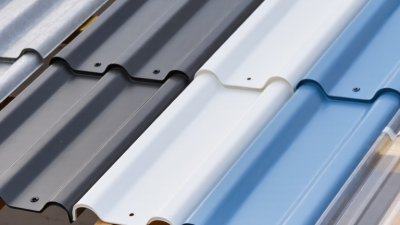
China Top 10 Roof Sheets Manufacturers for Global Buyers
Defining China’s top ten roof-sheet manufacturers requires measurable evidence, not factory photographs or export claims. For global buyers, quality starts with steel grade, thickness tolerance, coating mass, tensile strength, and dimensional consistency. ASTM A653 covers galvanized sheet, while ASTM A792 covers aluminum-zinc-coated steel. These standards specify test methods and requirements; they do not automatically certify every shipment. That distinction matters. An experienced buyer should request mill certificates, batch numbers, inspection records, and retained samples. Independent testing is stronger than a sales promise.
The ISO Survey 2023 recorded 1,265,216 ISO 9001 certificates worldwide, showing its broad adoption. Yet ISO 9001 verifies a quality management system, not roof-sheet performance itself. World Steel Association data reported approximately 1.89 billion tonnes of crude steel production in 2023, proving that scale alone is a weak filter. Rankings should check corrective-action logs, calibration records, incoming-coil inspection, and traceability from coil to pallet. ASTM B117 salt-spray results can reveal coating behavior, but they cannot predict every outdoor climate. Coastal humidity, cut edges, fasteners, and installation errors change real service life.
A credible top-ten list should combine laboratory results, ISO 9001 status, delivery consistency, warranty terms, and complaint response. Public data can help. UN Comtrade records should be checked carefully, because export value does not prove product quality. Factory audits should verify coating lines, thickness gauges, curing controls, and moisture-resistant packaging. Small gaps are revealing. If a supplier refuses raw test data, the ranking deserves revision. That uncomfortable finding is useful.
This non-company-specific benchmark shows a practical buyer scorecard for comparing roof sheet manufacturers. The weighting prioritizes material traceability, coating performance, dimensional accuracy, mechanical properties, and documented quality systems. ISO 9001 should be verified through a valid certificate, while ASTM compliance should be confirmed against the relevant product specification and test reports.
China’s leading roof sheet manufacturers serve warehouses, farms, workshops, and commercial projects worldwide. Their product profiles commonly include corrugated sheets, galvanized panels, galvalume panels, and pre-painted steel roofing. The World Steel Association reported global crude steel production of about 1.89 billion tonnes in 2023, showing the scale behind this supply chain.
Thickness options usually range from 0.25 to 1.20 millimeters. However, buyers should verify actual thickness after coating, not only the advertised gauge. Common zinc coatings include Z120, Z180, and Z275, measured in grams per square meter. Aluminum-zinc coatings often provide better heat and corrosion resistance, especially in humid environments. Pre-painted sheets may use polyester, SMP, or PVDF systems, with paint thickness and warranty terms requiring careful comparison.
Annual output differs sharply among manufacturers. Some report 100,000 tonnes, while larger factories claim over 500,000 tonnes of roofing capacity. These figures may represent total steel capacity, not finished roof sheets. That distinction matters. Product testing should include coating mass, yield strength, color consistency, and salt-spray performance. ASTM A653, ASTM A792, and ISO 12944 references can improve technical comparability. Still, certificates alone are not enough. Factory audits, sample inspections, and shipment records often reveal practical weaknesses that glossy profiles miss.
China’s top roof sheet manufacturers should be judged by more than factory photos. Global buyers need clear MOQ, lead times, export markets, and certifications. A practical MOQ may range from one container to several hundred square meters, depending on coating, thickness, and color. Standard galvanized sheets often ship faster, while customized profiles may require 20–45 days. Delays remain possible. The World Bank’s 2023 Logistics Performance Index evaluates customs, infrastructure, and timeliness, showing why port reliability matters as much as production speed.
Export experience should be verified through recent shipping records, not general claims. Ask for destination markets, packing photos, loading plans, and inspection reports. Certifications also need careful checking. ISO 9001 supports process control, but it does not guarantee roof performance. Product documents should match relevant ASTM, EN, or national standards. Test values for coating thickness, yield strength, salt spray resistance, and fire behavior are more useful than a certificate logo. UN Comtrade trade data can help compare a supplier’s declared export activity across steel product categories.
Tips: Request a sample before approving bulk production. Put MOQ, tolerance, delivery terms, and remedy clauses in writing. A low price may hide thin coating or weak packaging. I would also question unusually short lead times; they can indicate stock material, not fresh production. Review documents with an independent inspector when the project is large.
When comparing China’s top 10 roof sheet manufacturers, buyers should test numbers against site conditions, not catalogue promises. Ask for wind-load calculations based on roof height, building exposure, sheet span, and fixing spacing. A coastal warehouse needs different engineering from an inland workshop. Small details matter. Request test reports, installation drawings, and material specifications before approval.
Warranty terms deserve careful reading. Confirm coverage for corrosion, coating failure, leakage, and structural performance. Check whether the warranty starts at shipment, delivery, or installation. Some warranties exclude poor ventilation, cutting damage, or unsuitable fasteners. That is reasonable, but exclusions must be visible. Keep written records of inspections and maintenance. A verbal assurance is weak evidence.
Compare total cost per m², not only the quoted sheet price. Include freight, customs handling, accessories, screws, insulation, cutting waste, installation, and future maintenance. A thinner sheet may reduce the invoice but increase replacement risk. The calculation is rarely perfect. Allow for 5–10% installation waste, then test the estimate against your actual roof layout. In procurement reviews, the lowest offer often changes after these missing costs appear. Ask suppliers to present one transparent cost schedule, using the same thickness, coating, profile, and delivery basis.
| Benchmark Profile | Typical Product | Base Metal & Thickness | Coating Specification | Indicative Wind-Load Capability | Typical Warranty Terms | Indicative EXW Price USD/m² |
Estimated Landed Cost USD/m² |
Typical MOQ | Lead Time |
|---|---|---|---|---|---|---|---|---|---|
| Profile 01 | Corrugated galvanized roofing sheet | DX51D steel 0.35–0.50 mm |
Z120–Z275 zinc coating Yield strength typically 230 MPa |
Approx. 1.2–2.0 kPa with suitable purlin spacing and fasteners | Up to 10 years coating warranty; no-leak warranty normally excluded unless installation is controlled | $3.20–$5.20 | $5.20–$8.70 | 5–10 tonnes | 10–20 days |
| Profile 02 | Prepainted galvanized corrugated sheet | DX51D steel 0.40–0.60 mm |
AZ100–AZ150 or Z180–Z275 PE paint system, 15–25 μm top coat |
Approx. 1.5–2.5 kPa when engineered for the span and fixing pattern | 5–10 years color warranty; 10–15 years corrosion warranty depending on exposure category | $4.20–$6.80 | $6.50–$10.80 | 3–5 tonnes | 12–22 days |
| Profile 03 | PPGI trapezoidal roofing panel | Structural steel 0.45–0.75 mm |
Galvanized or Al-Zn substrate Top coat commonly 20–25 μm |
Approx. 2.0–3.5 kPa with deeper ribs and reduced purlin spacing | 10 years paint performance commonly offered; written exclusions apply to coastal and industrial environments | $4.80–$7.80 | $7.20–$11.90 | 3–5 tonnes | 15–25 days |
| Profile 04 | Aluminium-zinc coated roofing sheet | 55% Al-Zn steel 0.40–0.60 mm |
AZ150–AZ200 coating Improved atmospheric corrosion resistance |
Approx. 1.5–2.8 kPa depending on profile height and support spacing | 10–20 years substrate warranty; paint warranty varies by resin and climate | $4.50–$7.20 | $6.80–$11.30 | 5 tonnes | 12–25 days |
| Profile 05 | PVDF-coated architectural roof sheet | Galvanized or Al-Zn steel 0.50–0.80 mm |
PVDF top coat typically 25–30 μm High weathering resistance |
Approx. 2.0–3.8 kPa with an engineered structural system | 15–20 years color and chalking warranty; substrate warranty may be separate | $6.80–$10.80 | $9.40–$15.90 | 3–5 tonnes | 18–30 days |
| Profile 06 | Standing-seam metal roofing panel | Galvanized or Al-Zn steel 0.60–0.90 mm |
AZ150–AZ200 or galvanized substrate Factory-formed concealed-fix system |
Approx. 2.5–4.5 kPa when clips, seams, and substrate are correctly designed | 10–20 years coating warranty; watertightness depends strongly on detailing and installation | $7.20–$12.50 | $10.20–$17.80 | 1,000–3,000 m² | 20–35 days |
| Profile 07 | Insulated sandwich roof panel | Outer steel skins 0.40–0.60 mm |
PE, SMP, or PVDF coating PIR, EPS, or mineral-wool core |
Approx. 1.5–3.0 kPa; confirm panel span tables and fastener pull-out values | 5–10 years coating warranty; core and thermal-performance warranty commonly 5–10 years | $10.50–$18.50 | $14.00–$23.50 | 500–1,000 m² | 20–35 days |
| Profile 08 | Stone-coated metal roof tile | Galvanized steel 0.40–0.50 mm |
Al-Zn substrate with acrylic binder and mineral granules | Approx. 1.5–2.5 kPa; use project-specific uplift testing for exposed sites | 20–30 years granule and corrosion warranty, subject to installation and maintenance conditions | $6.50–$10.50 | $9.00–$15.20 | 1,000–2,000 m² | 20–35 days |
| Profile 09 | Roof deck structural panel | Structural galvanized steel 0.75–1.20 mm |
Z180–Z275 galvanized coating Designed for composite or non-composite decks |
Approx. 3.0–6.0 kPa capacity range; final value requires span and load-table verification | 5–10 years coating warranty; structural performance is governed by approved design calculations | $6.20–$10.20 | $8.60–$14.40 | 10–20 tonnes | 18–30 days |
| Profile 10 | Low-carbon recycled-content roof sheet | Galvanized or Al-Zn steel 0.45–0.70 mm |
Coating and recycled content must be confirmed by mill certificate and EPD documentation | Approx. 1.5–3.0 kPa depending on the selected profile and support layout | 5–15 years coating warranty; environmental documentation is normally separate from product warranty | $5.00–$8.60 | $7.50–$12.80 | 5–10 tonnes | 15–30 days |
| Total-cost reminder: Estimated landed cost includes an indicative allowance for export packing, inland transport, ocean freight, insurance, customs handling, and destination delivery. It excludes structural design, local taxes, unloading, installation labor, insulation, flashings, fasteners, wastage, and maintenance. Wind-load figures are screening ranges only; the final roof design must be checked against the project location, building height, terrain, roof geometry, purlin spacing, edge-zone uplift, and applicable local building code. | |||||||||