What Are the Top Easy Install Roofing Tile Options?
Choosing an Easy Install Roofing Tile can make a roofing project faster, cleaner, and easier to plan. However, “easy” does not mean effortless. Roof pitch, tile weight, fastening methods, underlayment, and local weather conditions still matter. A lightweight polymer tile may click together quickly, while interlocking metal tile can reduce cutting and handling. Composite tiles may also offer familiar shapes without the weight of traditional clay or concrete.
Veteran builder Tom Silva has often stressed, “A roof is only as good as the installation.” That principle deserves attention here. Even the most user-friendly tile can fail when flashing is poorly fitted or ventilation is ignored. Experienced installers usually check the deck, measure exposure carefully, and follow the manufacturer’s fastening pattern. Small details matter. A misplaced fastener can invite trouble.
This guide will compare popular Easy Install Roofing Tile options, including metal, composite, synthetic slate, and lightweight concrete alternatives. It will consider installation time, tools, durability, appearance, maintenance, and overall value. Product claims can sound impressive, but job-site conditions are less predictable. I would not choose a tile only because it promises quick installation. That would be convenient, but incomplete. A better decision matches the tile with the roof structure, climate, budget, and installer skill. Readers should also confirm building requirements and warranty conditions before purchasing. Sometimes, the simplest option on paper creates the most complicated repair later.
What Makes a Roofing Tile Easy to Install?
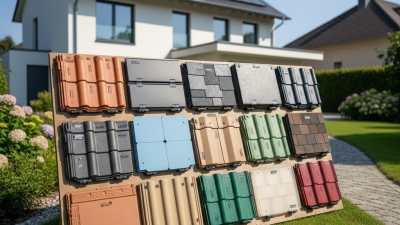
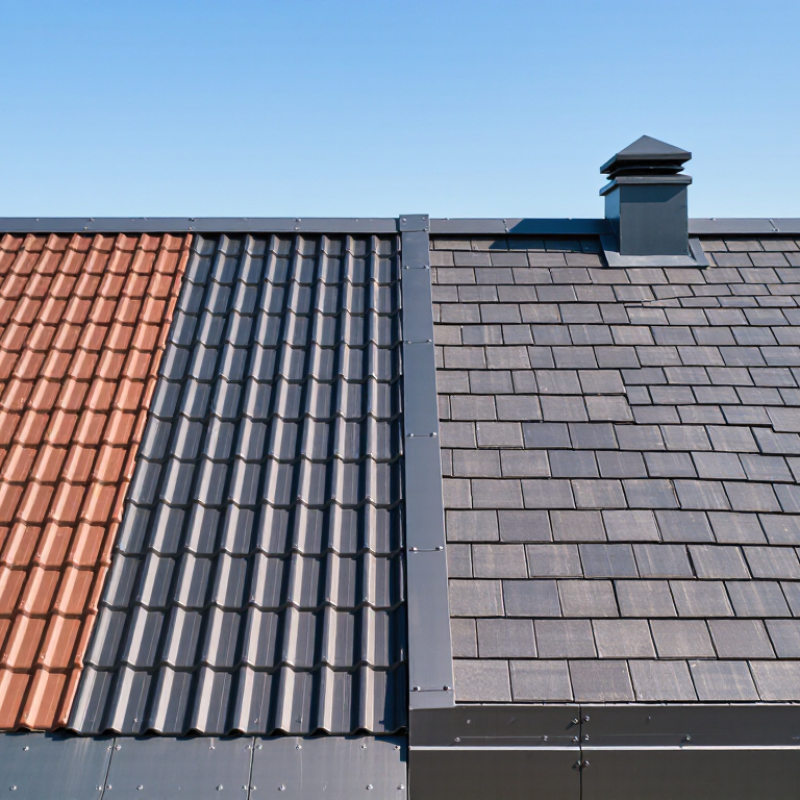
An easy-install roofing tile is not simply the lightest option. It should align cleanly, accept mechanical fasteners, and require few complicated cuts. Interlocking concrete tiles can reduce layout errors because their side laps guide placement. Lightweight composite tiles are easier to carry, trim, and handle around vents. Flat clay tiles can also install efficiently when the roof deck is regular and the underlayment is prepared correctly. The installer still matters greatly.
The 2024 International Residential Code sets a 2.5:12 minimum slope for many clay and concrete tile systems. That measurement affects water drainage and tile selection. A tile that looks simple may fail on a low-slope roof. The National Roofing Contractors Association’s roofing guidance also emphasizes approved fastening, flashing, and underlayment details, not appearance alone. Small mistakes become expensive leaks.
Safety deserves equal attention. U.S. Bureau of Labor Statistics reports consistently place falls among the leading causes of fatal workplace injuries. Lighter tiles can reduce lifting strain, but they do not remove fall risks. The U.S. Department of Energy notes that reflective roofing surfaces can reduce roof temperatures by up to 50°F in suitable conditions. That benefit depends on color, ventilation, climate, and installation quality.
I would question any product advertised as “tool-free.” Roof geometry is rarely perfect. Cut waste, fragile edges, and awkward ridge details can slow the work. A practical choice has clear installation diagrams, predictable fastening points, and locally available replacement pieces. Perhaps that is less exciting, but it is easier to trust.
Lightweight Roofing Tiles for Faster Installation
What Are the Top Easy Install Roofing Tile Options?
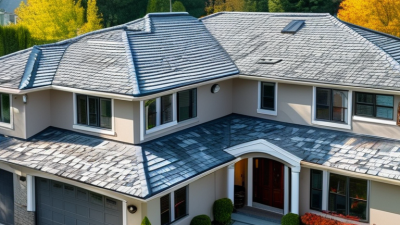
Lightweight roofing tiles can reduce lifting, cutting, and structural demands during installation. Metal tiles are a practical choice because they arrive in large, manageable panels. They often include interlocking edges that help crews align each course quickly. Composite tiles offer another option. They can resemble slate or wood without the same weight. Many installers find them easier to cut around vents, valleys, and roof windows.
Installation speed still depends on the roof shape. A simple gable roof may move quickly, while a steep roof with many intersections needs more planning. Lightweight fiber-cement tiles can provide a solid appearance, but they require careful handling. Cracked edges create avoidable waste. The lightest material is not automatically the best choice. Local wind, fire, snow, and building requirements must guide the decision. An experienced roofer should inspect the deck before choosing any tile system.
Tips:
Confirm the tile weight with the manufacturer’s technical sheet. Ask how fasteners should be spaced. Check whether underlayment and flashing are included in the installation method. Keep tiles dry and stacked on a level surface. Small mistakes matter. I have seen rushed crews lose time fixing uneven courses and exposed fasteners. A short trial section can reveal alignment problems before the full roof is covered. Always follow local code and the manufacturer’s instructions.
Interlocking Tile Systems That Simplify Roof Assembly
Interlocking roofing tile systems can make roof assembly more predictable for trained installers. Each tile fits into the next through side and top channels, reducing alignment errors across the roof surface. The process still depends on accurate measurements, suitable underlayment, and correct roof pitch. Easy does not mean careless.
In field inspections, the most reliable installations begin with a straight starter course. Installers often dry-fit several tiles beside the eaves before fixing anything permanently. This reveals uneven battens, awkward cuts, or poor edge spacing early. Small details matter. A misplaced first tile can shift an entire row by the ridge.
Many interlocking systems use concealed fasteners, clips, or designated fixing points. Their placement should follow the installation instructions and local building requirements, especially in high-wind or heavy-rain areas. Flashing around chimneys, valleys, skylights, and roof edges needs careful shaping. Tile joints alone cannot manage complex water paths.
Lightweight tile options may reduce handling effort, but workers still need safe access equipment and stable footing. I have seen projects move quickly until a rushed valley detail caused leaks during the first storm. That mistake is easy to underestimate. A final inspection should check exposed fasteners, broken corners, open joints, and clear drainage channels before the roof is considered complete.
Best Roofing Tile Materials for DIY-Friendly Projects
Top Easy Install Roofing Tile Options
The best DIY-friendly roofing tile materials are lightweight composite, metal, and interlocking concrete tiles. Composite tiles often mimic slate or wood, but weigh far less. Many can be cut with standard saws and secured over prepared battens or decking. Metal tiles usually arrive in manageable panels or small interlocking pieces. They resist rain well and install quickly when the roof has clean, straight lines.
Concrete tiles can work for confident homeowners with structural support and careful planning. However, they are heavy, awkward, and less forgiving during handling. Clay and natural slate look beautiful, but their weight, breakage risk, and specialized installation make them poor choices for most beginners. The word “easy” can be misleading. A roof still needs correct flashing, underlayment, ventilation, and edge protection. Local building requirements also matter. Skipping one detail can cause leaks months later.
Tips: Measure the roof twice, then order extra tiles for cuts and accidental damage. Check the roof pitch before choosing a tile system. Confirm that the existing structure can carry the material’s weight. Work only in dry, calm weather, and use proper fall protection. Read the installation instructions completely before opening the first box. If the roof has valleys, chimneys, or unusual angles, ask a qualified roofer to inspect the plan. DIY can reduce labor costs, but rushing is an expensive kind of confidence.
Key Factors for Choosing Easy-Install Roofing Tiles
What Are the Top Easy Install Roofing Tile Options?
Key Factors for Choosing Easy-Install Roofing Tiles
Easy-install roofing tiles may include interlocking concrete, lightweight composite, metal, and synthetic slate systems. Their installation speed depends on more than tile shape. Roof pitch, deck condition, underlayment, and fastening methods all matter. A tile that clips together quickly may still require careful flashing around vents and chimneys.
Weight deserves close attention. Concrete tiles can place heavy loads on older framing, while composite and metal options are often lighter. However, lighter does not always mean better. Wind exposure, hail risk, temperature changes, and local fire requirements should guide the decision. Check the manufacturer’s technical data and local building rules before ordering materials. A qualified roofer can also inspect the deck for rot, uneven areas, or weak fastener points.
Interlocking edges can reduce layout time and improve alignment. Pre-cut accessories may make roof penetrations less troublesome. Still, “easy install” is not the same as “easy for everyone.” I have seen rushed projects fail because installers ignored valley details and ventilation. I once underestimated how much a small pitch difference could affect tile coverage. That mistake changed my view of installation estimates. Ask about replacement tiles, repair access, warranty conditions, and expected maintenance. Request a written estimate that separates materials, labor, flashing, underlayment, and disposal costs. A practical choice should save time without hiding difficult roof details.