How to Find the Best Roof Tile Factory in China?
Finding the best Roof Tile Factory in China requires more than comparing catalog prices. A reliable supplier should demonstrate manufacturing experience, stable quality control, and clear communication. Look beyond polished websites. Ask for factory videos, production details, and recent project references.
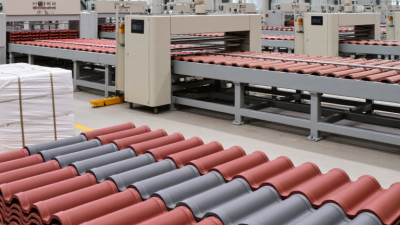
During evaluation, inspect the clay or concrete preparation area, molding equipment, drying rooms, and kiln lines. These details reveal how seriously a factory manages consistency. Request physical samples, not only digital images. Check their dimensions, surface finish, color variation, water absorption, and edge strength. A professional factory should provide test reports from recognized laboratories and explain each result clearly.
Ask practical questions. What is the minimum order? How are tiles packed for long-distance shipping? Can the factory reproduce a custom profile or color? How does it handle damaged goods? Clear answers matter. Export experience helps, but it does not guarantee perfect performance. Some suppliers look impressive during a short visit, yet struggle with large orders. That possibility deserves attention.
A dependable Roof Tile Factory will welcome independent inspections and written quality agreements. Compare several factories before deciding. Review response speed, sample accuracy, production capacity, and after-sales support together. The lowest quotation may hide weaker packaging or inconsistent firing. Still, high prices do not automatically prove superior quality. Verify every claim with evidence, test samples, and references. The best choice is not always the largest manufacturer. It is the factory that repeatedly delivers suitable tiles, honest information, and measurable results. That standard takes patience. It also prevents expensive assumptions.
Define Your Roof Tile Requirements and Project Standards
How to Find the Best Roof Tile Factory in China?
Define your roof tile requirements before contacting any factory. Record the roof area, pitch, tile profile, color, and installation method. Consider local weather carefully. Coastal projects may need stronger corrosion resistance, while cold regions require verified frost resistance. Ask an engineer to confirm the required load, wind resistance, water absorption, and fire performance.
Project standards must be written, not discussed casually. Specify tile dimensions, acceptable tolerances, surface defects, color variation, and packaging details. Reference the building codes used at the project location. Request independent test reports for water absorption, breaking strength, and freeze-thaw performance. Samples should match the approved production specification. A beautiful sample means little if the factory cannot maintain consistency.
Small details matter. Measure several samples, not just one. Check the underside, edges, finish, and fitting accuracy. Request a pre-production sample and a batch inspection plan. In practice, buyers often focus on price first and discover installation problems later. That approach needs reconsideration. A cheaper tile may require more cutting, replacement, or structural adjustment. Ask about mold control, kiln temperature records, quality staff, and shipment protection. Also confirm production capacity against your schedule. A factory may promise quickly, but its past delivery records deserve more attention than confident words.
How to Find the Best Roof Tile Factory in China?
Define Your Roof Tile Requirements and Project Standards
Roof covering weight is a key requirement when comparing tile specifications and factory quotations. The figures below show indicative typical weights for common roofing materials; final values depend on tile profile, thickness, overlap, moisture content, and installation method.
How to use this chart: Confirm the required material category, target weight per square metre, applicable national or regional standards, wind and weather exposure, roof pitch, and structural load limits before requesting samples or quotations from a factory.
Research China’s Main Roof Tile Manufacturing Regions
China’s roof tile industry is concentrated in several distinct manufacturing regions. Foshan and surrounding areas in Guangdong are known for ceramic building materials and large-scale kiln production. The region offers broad product choices, modern glazing lines, and experienced export teams. However, quality can vary between factories, even within the same industrial zone.
Jiangsu, Zhejiang, and Shandong also deserve careful research. Yixing in Jiangsu has long experience with clay and ceramic products. Zhejiang suppliers often focus on decorative profiles and customized colors. Shandong has strong industrial capacity, competitive logistics, and access to major northern markets. Jiangxi, especially around Gao’an, has also developed a significant ceramic production base. Regional strength is useful, but it is not proof of factory reliability.
Look beyond the address. Request production photos, kiln specifications, test reports, and recent project references. Check whether the factory makes tiles itself or only trades for them. A serious supplier should explain water absorption, bending strength, frost resistance, color variation, and packing methods in plain language. Ask for samples from different production batches. Small differences matter.
Maps can mislead.
Visit the plant if possible. Observe raw material storage, forming equipment, drying rooms, and final inspection. During an audit, damaged tiles near the loading area may reveal weak handling controls. Some factories have impressive showrooms but limited production discipline. That deserves honest reflection before placing a large order. Verify export documents and agree on inspection standards before payment.
Evaluate Factory Quality, Certifications, and Production Capacity
How to Find the Best Roof Tile Factory in China?
A reliable roof tile factory should prove quality through repeatable processes, not attractive samples alone. Visit the production floor, if possible, and inspect raw material storage, forming equipment, and kiln controls. Ask how workers measure dimensions, surface defects, water absorption, and breaking strength. A clean testing room helps, but records matter more. Request recent test reports and compare them with independent laboratory results. Small differences can become expensive installation problems.
Certifications deserve careful checking. Confirm the certificate holder, issuing organization, covered products, and expiration date. A certificate for one tile type may not cover another. Ask whether factory audits are regular or only arranged for sales visits. My own mistake was trusting a copied document before checking its scope. That shortcut weakened the supplier review. It should not happen twice.
Production capacity must match your project schedule. Review the number of forming lines, kiln size, daily output, shift arrangements, and maintenance plans. A factory may claim high capacity while operating only one usable line. Ask for a recent production schedule and a sample order before signing a large contract. Check batch labeling, carton protection, loading methods, and breakage records. Also confirm how the factory handles color variation between batches. The details are easy to overlook. Yet they often reveal whether quality control is practical, consistent, and accountable.
Compare Products, Prices, Minimum Orders, and Lead Times
Finding the best roof tile factory in China requires more than comparing catalog photos. I usually request identical specifications from three to five factories. Include tile profile, dimensions, thickness, color, coating, water absorption, and breaking strength. Ask for recent test reports and production photos. A sample should match the finished batch, not only the showroom piece. Check edge accuracy and surface consistency under daylight. Small differences can complicate installation.
Compare prices in one spreadsheet. Separate tile costs, molds, packaging, inland transport, inspection, and shipping terms. A low quotation may exclude protective pallets or replacement pieces. Request a written minimum order quantity for each color and profile. Some factories accept mixed containers, but not all. Confirm lead times for samples, mass production, and reorders. Ask how delays are handled during peak seasons. I once focused on unit price and missed packaging damage. That mistake changed my supplier checklist.
Tips: Send a marked roof drawing and target delivery date. Request a production sample before approving bulk work. Check factory capacity, kiln schedules, and quality records. Keep payment milestones tied to documented inspections. Leave room for roughly five percent spare tiles. It feels excessive, but repairs rarely use identical color batches. Also ask whether the quoted lead time starts after deposit, approval, or raw-material confirmation.
Verify Samples, Contracts, Inspection, and Shipping Arrangements
How to Find the Best Roof Tile Factory in China?
Finding a reliable roof tile factory in China starts with evidence, not polished photographs. Request physical samples in the final color, profile, and surface finish. Check dimensions with calipers, inspect corners, and compare shades under daylight. A sample may look excellent, yet production consistency can still fail. Ask for test records covering water absorption, strength, frost resistance, and color stability. Use an independent laboratory when project risk or order value is high.
Put every agreed detail into the contract, including tolerances, packaging, replacement terms, and payment stages. Attach approved sample photos and technical drawings. Define inspection timing, sampling quantities, and acceptance rules before production begins. A pre-shipment inspection can catch chipped edges, mixed batches, or weak pallets. Do not rely only on factory self-checks. One common mistake is discussing loading dates casually, then discovering delays later. Confirm the container type, pallet dimensions, moisture protection, port, shipping terms, and required documents in writing.
Tips: Keep one sealed reference sample for future comparisons. Ask the factory to photograph pallet loading before shipment. Check whether tiles are separated with suitable protection. Review the packing list against the actual carton count. Leave some schedule space for reinspection or port delays. These small controls cost time, but they can prevent expensive replacements.