Leave Your Message
-
Phone
-
E-mail
-
Whatsapp
Choosing the right Soundproof Roof Sheet manufacturer in China requires more than comparing prices and catalog photos. A reliable supplier should understand roofing structure, airborne noise, rain impact, thermal movement, and long-term weather exposure. The best manufacturers can explain how each layer works, from the metal skin and acoustic core to the protective coating. They should also provide measurable data, such as sound reduction ratings, fire performance, thickness tolerance, and water resistance.
Professor Trevor Cox, a respected acoustic engineer and author, offers a useful principle: “Good acoustic design begins with understanding the source of the sound.” This idea matters when selecting a Soundproof Roof Sheet. A factory near an airport faces different challenges from one serving workshops, warehouses, or residential buildings. Rain striking a thin roof can create sharp, repetitive noise. Machinery may produce low-frequency vibration that ordinary foam cannot control.
Look closely.
A dependable Chinese manufacturer should show production details, not only polished samples. Visit the factory when possible. Ask for laboratory reports, project references, installation guidance, and independent inspection records. Check whether the company controls material sourcing and quality testing internally. Small differences in core density can affect both performance and service life.
No roof sheet is perfectly soundproof. That wording can mislead buyers. Roof shape, ceiling cavities, gaps, fasteners, and ventilation openings also influence the final result. Some suppliers may overstate performance. Others may provide confusing test figures.
This guide compares China’s leading Soundproof Roof Sheet manufacturers through practical criteria. It considers acoustic performance, engineering experience, customization, certifications, production capacity, and after-sales support. The goal is not to praise the loudest claim, but to identify suppliers that can support a quieter, safer, and more dependable roof system.
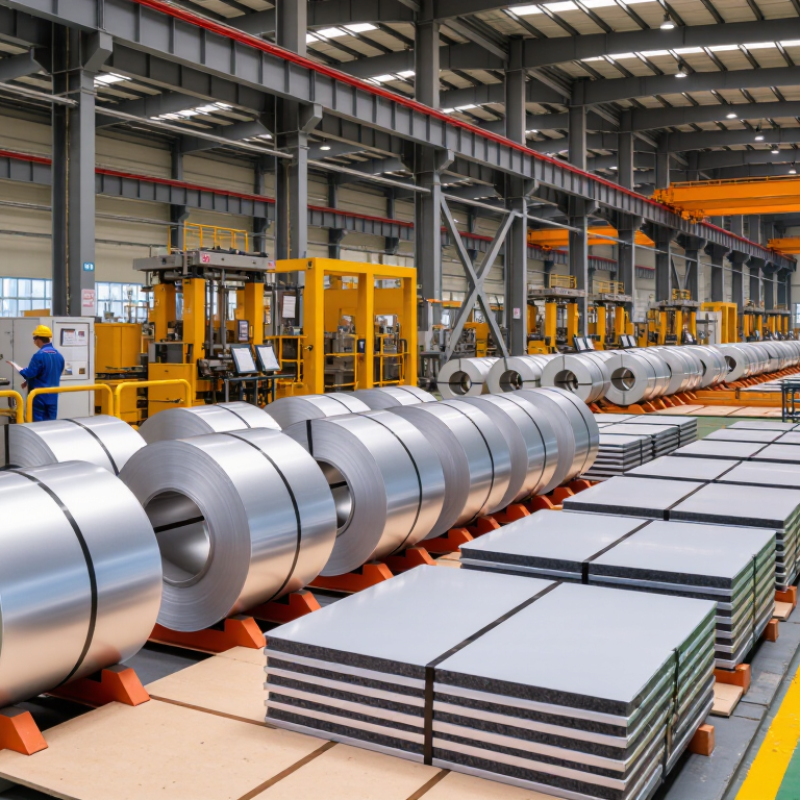
China Best Soundproof Roof Sheet Manufacturers?
What makes a soundproof roof sheet manufacturer the best? Practical experience comes before impressive brochures. A capable manufacturer studies the building, local weather, roof pitch, and noise source. Rain striking metal can sound sharper than factory machinery. HVAC vibration creates another challenge.
Reliable manufacturers provide tested acoustic data from recognized laboratories. They should explain sound transmission, rain noise reduction, insulation density, and fire performance clearly. Ask for complete test conditions, not one attractive number. A professional supplier also controls steel thickness, core density, coating quality, and panel dimensions. Small differences can affect installation and sound control.
Factory experience matters. Inspectors should trace raw materials, production batches, and packaging records. Clear installation drawings are equally important. Poorly sealed joints can defeat an expensive roof system. The best suppliers offer technical support during measurement and installation, not only after payment. They can recommend suitable fasteners, sealing tapes, and overlapping methods for specific roof designs.
No manufacturer gets every project right. Site conditions change, and acoustic predictions may miss unusual reflections. Honest suppliers admit this risk and suggest field testing when necessary. They welcome sample checks and independent inspections. A dependable warranty should describe coating limits, leakage responsibility, and maintenance requirements in plain language. That level of transparency shows expertise more convincingly than polished claims.
| Evaluation Dimension | Recommended Technical Benchmark | Why It Matters for Soundproof Roofing | Verification Method or Reference | Best-Practice Level |
|---|---|---|---|---|
| Acoustic Performance | Complete roof assemblies should be tested for airborne sound insulation; higher laboratory sound transmission loss generally indicates better performance. | Sound reduction depends on the full roof build-up, including the outer sheet, insulation, liners, fasteners, joints, and supporting structure—not the metal sheet alone. | Request a laboratory test report for the complete roof assembly based on ISO 10140-2 or ASTM E90, where applicable. | |
| Impact Noise Control | The roof system should include a resilient acoustic layer or tested composite construction for rain and hail noise reduction. | Rain and hail generate structure-borne impact noise that is not fully represented by airborne sound ratings. | Review impact-noise or rainfall-noise test data and confirm the test assembly matches the proposed roof design. | |
| Insulation Core Quality | Use a continuous, properly bonded insulation core with documented density, thickness, and thermal conductivity. | Mineral wool, PIR, PUR, and other cores provide different combinations of acoustic, thermal, fire, and moisture performance. | Check product technical data, batch records, core thickness, density, and independent test results. | |
| Panel Joint and Edge Design | Interlocking or overlapping joints should minimize air leakage and avoid continuous acoustic gaps. | Small gaps around joints, penetrations, ridge caps, and roof edges can significantly reduce the effective acoustic performance of the assembly. | Inspect shop drawings, joint details, sealant specifications, and installation tolerances. | |
| Metal Face-Sheet Performance | The face sheets should have suitable thickness, corrosion protection, profile geometry, and stiffness for the project environment. | A rigid and durable outer layer improves weather resistance and can reduce panel vibration when correctly combined with the acoustic core. | Verify steel or aluminum grade, nominal thickness, coating designation, profile drawings, and dimensional tolerances. | |
| Fire Safety | The complete roof assembly should have a fire classification suitable for the building type and local code requirements. | Acoustic materials must not compromise fire resistance, reaction-to-fire performance, smoke control, or insurance requirements. | Request current fire-test or classification reports for the exact core, facer, thickness, and joint configuration. | |
| Thermal and Condensation Control | The system should provide a documented thermal resistance or U-value and include a condensation-control strategy. | Moisture inside a roof assembly can reduce insulation effectiveness, cause corrosion, and create conditions for mold growth. | Review thermal calculations, vapor-control details, climate assumptions, and condensation-risk analysis. | |
| Weather Tightness | The roof design should control wind-driven rain, drainage, flashing, penetrations, and water entry at all junctions. | A soundproof roof that leaks will not provide reliable long-term building performance. | Check water-tightness testing, drainage details, flashing drawings, sealant data, and installation instructions. | |
| Manufacturing Consistency | Documented quality-control procedures should cover incoming materials, bonding, dimensions, coating, curing, and final inspection. | Consistent production is necessary to maintain panel thickness, core uniformity, joint accuracy, and predictable acoustic performance. | Request quality manuals, inspection plans, calibration records, batch traceability, and nonconformity procedures. | |
| Standards and Certifications | Products should be tested or certified according to standards relevant to the destination market and application. | Recognized testing improves comparability and helps confirm that published data applies to the supplied product. | Validate report numbers, issuing laboratories, test dates, scope, sample construction, and product identification. | |
| Customization Capability | The manufacturer should support project-specific thicknesses, profiles, colors, lengths, acoustic layers, flashings, and accessories. | Acoustic performance is strongly affected by roof geometry, spans, service penetrations, and connection details. | Review approved drawings, engineering calculations, prototype samples, and written configuration limits. | |
| Installation Support | Clear installation manuals, trained technical personnel, and documented site-support procedures should be available. | Incorrect fastening, compression, cutting, or sealing can create acoustic bridges and air paths. | Request method statements, installer training records, inspection checklists, and commissioning procedures. | |
| Durability and Warranty | Warranty terms should clearly define coating durability, water tightness, bonding integrity, and installation conditions. | Long-term acoustic performance depends on the core remaining dry, bonded, dimensionally stable, and free from corrosion damage. | Compare warranty exclusions, maintenance requirements, corrosion-resistance data, and expected service conditions. | |
| Export and Project Experience | The manufacturer should demonstrate experience with the relevant climate, building type, logistics, and regulatory market. | International projects require reliable packaging, documentation, dimensional control, and compliance with destination-market requirements. | Review anonymized project records, delivery documentation, inspection history, and references for comparable applications. |
Selection principle: The best soundproof roof sheet manufacturer is not identified by a single noise-reduction figure. The strongest choice is the supplier that can provide independently verified acoustic data for the complete roof assembly, reliable fire and weather performance, consistent manufacturing quality, accurate technical documentation, and competent installation support.