logo
Leave Your Message

What Are the Best Soundproof Roof Tiles?

A Soundproof Roof Tile can soften rain drumming, traffic rumble, and other outdoor noise, but no tile works alone. The roof is a layered system. Its surface, underlay, cavity, insulation, and ceiling all affect what reaches a room. A heavy tile may reduce some sound, yet poor joints or an open roof space can undermine the result. Quiet depends on the details.

Acoustics professor Trevor Cox’s published work offers a useful principle for this guide: assess the complete roof assembly, not one product in isolation. This is a paraphrase, not a direct quotation. When comparing options, look for test data, stated installation conditions, and clear explanations of how performance was measured. Check whether a rating applies to airborne noise, impact noise, or both. Those figures are not interchangeable. Ask what sits beneath the tile, too.

Real rooms reveal the difference. A bedroom under a roof may still pick up sharp rain taps, low road noise, or sound through a poorly sealed loft hatch. Some improvements are modest. That can be frustrating. The best choice depends on the noise source, roof structure, budget, and installation quality—not a bold label alone. This guide compares common tile materials, explains the limits of product claims, and highlights questions worth asking before purchase. The aim is practical: help readers find a roof solution that fits their building and makes indoor spaces calmer, without promising perfect silence.

What Are the Best Soundproof Roof Tiles?

How Roof Tiles Control Airborne Noise, Rain Impact, and Structural Vibration

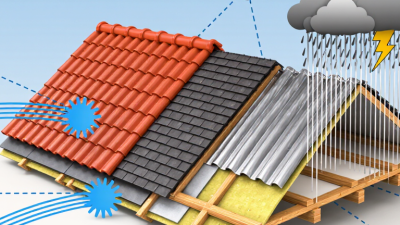
Roof tiles can reduce airborne noise, but their performance depends on the whole roof assembly. Dense tiles add mass, which can limit sound passing through the roof. However, sound may still travel through gaps, thin roof decking, or unsealed edges. A quiet tile over a poorly fitted deck may disappoint.

Rain creates a different problem. Each drop strikes the tile, sending impact energy into the battens and roof structure. A suitable underlay can absorb some of that energy, while a well-secured deck helps prevent loose components from rattling. Attic insulation may also soften noise inside the home, though it cannot fix every weak point. Small gaps matter.

Structural vibration can carry low, dull sounds through rafters and ceilings. Resilient layers between roofing components may reduce this transfer, but results depend on installation and the building itself. Look at tile weight, underlay, deck thickness, ventilation, and fixing details together. There is no perfect roof. Even a carefully designed assembly can transmit noise through a chimney, skylight, or adjoining wall. After heavy rain, listening inside the attic can reveal whether the main issue is impact, rattling, or sound entering through an opening.
Acoustic Rating Basics: STC, OITC, and NRC’s 0–1 Absorption Scale

What Are the Best Soundproof Roof Tiles?
Acoustic Rating Basics: STC, OITC, and NRC’s 0–1 Absorption Scale

No single rating identifies the best roof tile. STC estimates how well a tested assembly blocks common speech-range noise. OITC focuses more on outdoor sounds, including traffic and aircraft, which often contain lower frequencies. Compare ratings only when the roof assemblies are similar. A tile’s rating alone may not predict the finished roof’s performance.

NRC measures sound absorption, not sound blocking. Its scale runs from 0 to 1: a higher number means a material absorbs more sound within a room. It can help reduce indoor echo, but it does not prove that rain or road noise will stay outside. Numbers need context. Roof deck, underlayment, insulation, ceiling, and installation gaps all matter. Even a small unsealed opening can weaken an otherwise solid assembly.

Tips: Ask for test data on the complete roof assembly, not just the tile. Check whether the test reflects the noise you hear, such as heavy rain or passing trucks. If the ratings seem impressive, look closely at what was actually tested; I would not rely on a product label alone.

What Are the Best Soundproof Roof Tiles? — Acoustic Rating Basics: STC, OITC, and NRC’s 0–1 Absorption Scale

Roofing or Ceiling Approach How It Can Help with Noise STC and OITC Rating Guidance NRC Guidance (0–1 Scale) Practical Assessment
Concrete roof tiles Their mass can help limit airborne sound transmission. Performance also depends on the roof deck, gaps, insulation, and ceiling below. There is no universal STC or OITC value for concrete tiles alone. Use ratings from a laboratory-tested complete roof assembly. A hard tile surface is generally reflective; do not assume it has a useful NRC rating unless tested for sound absorption. A potentially good choice for a high-mass roof, but the complete assembly determines the result.
Clay roof tiles Like other heavy roof coverings, clay tiles can add mass. The roof’s layered construction and airtightness remain important. Tile type alone does not establish STC or OITC. Compare tested assemblies with the same deck and ceiling construction. Exposed hard tile surfaces typically reflect sound rather than absorb it; request an ASTM C423 absorption test if an NRC is claimed. Consider as part of a complete assembly, not as a stand-alone soundproofing product.
Metal roofing A thin metal sheet can resonate or make rain noise noticeable. A solid deck, suitable underlayment, insulation, and a decoupled ceiling can reduce these effects. No reliable STC or OITC rating can be assigned to the sheet alone. Look for laboratory results for the full roof-and-ceiling assembly. Metal roofing is not usually selected for sound absorption; NRC must be measured for the specific tested surface or assembly. For rain and exterior noise, prioritize the supporting layers and ceiling build-up over the metal panel alone.
Roof assembly with mineral wool or fiberglass insulation Porous insulation in a cavity can absorb sound within the assembly. A continuous ceiling and sealed penetrations help limit sound leakage. STC and OITC depend on the full assembly, including cavity depth, framing, board layers, and installation. Use tested assembly ratings. Absorber NRC values vary by product, thickness, mounting, and test method. NRC is not a substitute for an assembly sound-isolation rating. Often a useful component of a sound-control design, but insulation alone does not make a roof soundproof.
Suspended ceiling with acoustic panels Absorptive panels can reduce reverberation inside a room. They do not necessarily stop exterior sound from passing through the roof. Use an assembly STC or OITC result to assess sound transmission; a panel’s absorption rating cannot provide that answer. Acoustic panels are available across a range of tested NRC values, from low absorption to values approaching 1.0. Check the specific product test data. Best suited to improving indoor room acoustics; pair with a sound-isolating roof assembly when exterior noise is the problem.
Key rating comparison STC: a single-number rating for airborne sound transmission. OITC: a single-number rating intended to evaluate transmission of outdoor-to-indoor sound, including lower-frequency noise. Higher STC or OITC generally indicates better sound isolation under the applicable test and rating method. Ratings apply to the tested construction, not automatically to an individual tile. NRC: a sound-absorption rating from 0 to 1; higher values indicate more absorption. It describes absorption, not how effectively a roof blocks sound. For a roof exposed to traffic or aircraft noise, compare tested OITC results where available, alongside STC and the assembly details.

Important: STC and OITC are assembly ratings, while NRC measures sound absorption. Ask for laboratory reports identifying the complete construction and applicable test standards; there is no universal acoustic rating for a roof tile by itself.

Comparing Tile Materials by Mass, Density, and Sound-Transmission Performance

The best soundproof roof tile is not always the heaviest one. Mass per square metre matters because heavier layers generally resist airborne sound better. Concrete tiles and natural slate often have more mass than thin metal panels. But density alone can mislead: tile thickness, profile, and installation also affect how sound travels.

Mass helps. Yet the roof is a system. A dense tile over a lightweight, poorly sealed deck may still let traffic noise through. Underlay, roof cavity depth, insulation, and airtight detailing can change performance substantially. Rain noise also involves vibration, so a tile’s airborne sound rating does not tell the whole story. Compare test results for complete roof assemblies, using the same measurement method, rather than treating a tile rating as a guarantee. I would not treat one number as a verdict; roofs are annoyingly system-dependent.

For a practical comparison, ask for tile mass per area and assembly-level sound-transmission data. Check what layers were included in the test. A sample roof should also be inspected for gaps around eaves, vents, and roof windows, where sound can bypass heavy materials. If the supplier cannot provide comparable test details, the uncertainty matters. Choose based on the noise source, roof structure, and installation—not weight alone.

What Are the Best Soundproof Roof Tiles?

Comparing representative tile materials by mass, density, and estimated sound transmission loss

Roofing material Representative density (kg/m³) Representative installed mass (kg/m²) Estimated loss at 500 Hz (dB)
Natural slate2,7004039.0
Clay tile1,9005541.8
Concrete tile2,3005041.0
Asphalt shingles1,20012.528.9

These are representative material densities and approximate installed masses; actual products and roof designs vary. Sound-loss figures are theoretical mass-law estimates at 500 Hz, calculated from areal mass—not laboratory ratings for complete roofs. Under this simplified model, greater mass generally means more sound reduction, but the full roof assembly, gaps, insulation, and structure strongly affect real-world performance.

How ASTM E90 Testing and ISO 717-1 Ratings Assess Roof Assemblies

“Best” soundproof roof tiles cannot be judged by tile material alone. ASTM E90-23 measures airborne sound transmission loss through a complete building assembly under laboratory conditions. Test reports record performance across frequency bands, showing where sound passes through more easily. ISO 717-1:2020 then applies a reference curve to those results and calculates a single-number rating, Rw. Its standard rating uses measurements from 100 to 3,150 Hz. A higher Rw generally indicates better airborne sound insulation, but it does not describe every noise source.

Ask for the tested roof build-up, not just a tile’s rating. Decking, underlay, insulation, cavities, and sealed joints all affect the result. Details matter. For a home near road traffic, the ISO spectrum adaptation term Ctr can add useful context, especially where lower-frequency noise matters. Still, neither Rw nor an ASTM E90 report predicts the exact quietness of a finished room. Roof edges, vents, and installation gaps can weaken performance. I would treat a high rating as a clue, not a promise. Rain impact also requires separate consideration; airborne sound ratings do not measure the sound of drops striking the roof.

Choosing Roof Tiles by Verified Ratings, Underlayment, and Installation Quality

The best soundproof roof tiles are not necessarily the thickest or heaviest. Check verified acoustic ratings, but read the test report carefully. Sound ratings usually describe a complete roof assembly, not one tile. Look for details about the tile, roof deck, insulation, and ceiling used during testing. A rating without these details tells you little.

Underlayment matters. A dense, continuous layer can help reduce rain and airborne noise, while gaps or loose overlaps may weaken performance. Ask whether the tested assembly used the same underlayment and deck type planned for your home. Small differences count. The quietest laboratory result may not match a roof with different framing or ventilation.

Installation quality can make or break the result. Tiles should sit securely, with edges aligned and fixings installed as specified. Have the contractor explain how they will handle roof openings, eaves, and junctions, where sound and air can pass through. Request product documentation and inspection photos. A neat roof is reassuring, but appearance alone cannot verify acoustic performance. I would still treat a single rating with caution; real rooms, weather, and workmanship vary. That uncertainty is easy to overlook.