What Are the Best Soundproof Roof Tiles for 2026?
The best Soundproof Roof Tile for 2026 depends on the noise you need to control. Traffic, aircraft, and heavy rain create different acoustic problems. No roof tile blocks every sound equally. The full roof assembly matters: tiles, underlayment, deck, insulation, and ceiling all affect what reaches a room.
The World Health Organization’s 2018 Environmental Noise Guidelines recommend keeping average road-traffic exposure below 53 dB Lden and nighttime exposure below 45 dB Lnight. These are health-based exposure recommendations, not product ratings. Still, they show why nighttime noise deserves attention. A bedroom beneath a roof can feel very different when trucks pass or rain hits hard.
Compare independent test results, not marketing claims alone. Look for laboratory data on airborne sound insulation, such as measurements made under ISO 10140, and check whether the tested assembly resembles your own roof. Rain noise needs separate consideration; a good airborne-sound rating does not automatically mean quiet performance during a storm. Small details matter. Tile weight, underlayment, roof gaps, and installation quality can change the result. A thick tile may help, but thickness alone is not proof.
This guide compares tile materials, acoustic evidence, durability, and practical installation factors for 2026. It also notes where evidence is limited. That part is easy to overlook. No single tile is best for every building, and an impressive laboratory figure may not predict the sound in your room.
How Roof Tiles Reduce Airborne and Impact Noise
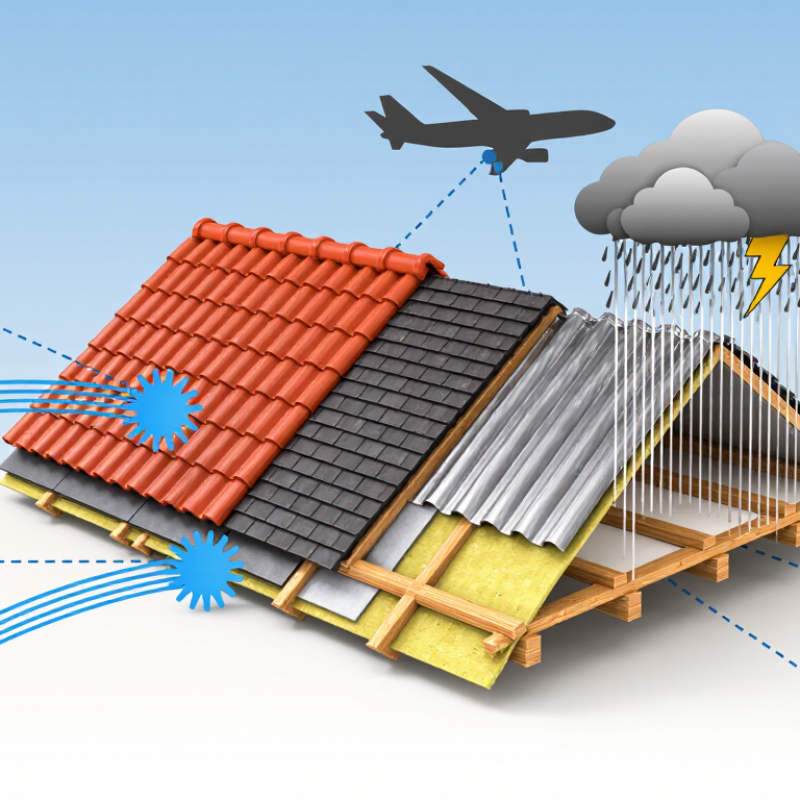
Roof tiles reduce airborne noise by adding mass between outdoor sound and the rooms below. Traffic hum, voices, and wind pass less easily through a dense roof than through a light, poorly sealed one. Clay and concrete tiles can help, but tile weight alone does not determine performance. Sound may still travel through gaps at eaves, roof joints, or an uninsulated attic. Small gaps matter.
Impact noise behaves differently. Rain striking a roof creates vibration, which can move through tiles, battens, and roof decking. A resilient underlay may soften that contact, while insulation and a well-sealed ceiling can limit sound entering living spaces. The full roof assembly matters more than a tile’s label. Not quite a simple choice. A heavier tile can still transmit vibration if it is rigidly connected to the structure.
When comparing options, look for acoustic test results for the complete roof build-up, not just the tile material. Check whether testing reflects your roof pitch, ceiling, and insulation. I would not promise silence during a hard downpour; even a good system may leave a faint patter. That trade-off is worth considering in bedrooms or attic rooms.
What Are the Best Soundproof Roof Tiles for 2026?
How roof tiles reduce airborne and impact noise
This chart shows standard A-weighting adjustments by frequency, not the sound reduction of any roof tile. A roof’s airborne-noise performance depends on the complete tested assembly; reducing impact noise typically also requires effective isolation or resilient layers.
Materials and Design Features That Affect Acoustic Performance
For 2026, the best soundproof roof tiles are part of a well-designed roof assembly, not a magic layer. Dense clay or concrete tiles can add mass, which may help reduce airborne noise. But gaps, rigid connections, and poorly sealed roof edges can still let sound through. Details matter. A continuous underlayment, tight flashing, and a sealed ceiling help limit those weak points. For impact noise from heavy rain, a ventilated cavity and absorptive insulation beneath the roof deck can soften the sharp patter. Too much ventilation, however, may create new sound paths if openings are left untreated.
Ask for test results for the complete roof-and-ceiling assembly, not just the tile. ASTM E90 measures airborne sound transmission in a laboratory; assembly ratings are more useful than material claims alone. The World Health Organization’s Night Noise Guidelines for Europe identify 30 dB LAeq inside bedrooms and 40 dB Lnight outdoors as health-based nighttime benchmarks. These are context, not guarantees for any roof. Compare documented test conditions, including tile, underlayment, insulation, cavity depth, and ceiling layers. A dense tile over a thin, unsealed deck may disappoint. Even a strong test rating can differ from field performance when installation leaves small gaps. Not the tile alone.
How to Compare Acoustic Ratings, Durability, and Cost
To compare soundproof roof tiles, ask for test results for the complete roof assembly, not just the tile. ASTM E90 measures airborne sound transmission in a laboratory; ASTM E413 uses those results to calculate a Sound Transmission Class (STC) rating. Higher STC generally means better airborne-noise reduction, but it does not describe every sound, especially the drumming of heavy rain. Check whether the test included the same underlayment, insulation, deck, and ceiling as your planned roof. Small differences matter.
Durability changes the real cost. Tile Roofing Industry Alliance guidance describes tile roofs as 50-year-plus systems, but the underlayment may need replacement sooner. Ask for its expected service life, wind-test documentation, and warranty exclusions. A cracked tile is easy to spot; aging layers underneath are not. I would want those details in writing.
For a cost reference, Remodeling’s 2024 Cost vs. Value report put a national asphalt-shingle roof replacement at about $30,680, with 56.9% cost recouped at resale. That is a comparison point, not a tile quote; local labor, roof pitch, and tear-off can shift prices sharply. Get itemized estimates for materials, installation, and acoustic upgrades, then compare cost over the expected service life. The cheapest bid may leave out the quiet part.
What Are the Best Soundproof Roof Tiles for 2026? How to Compare Acoustic Ratings, Durability, and Cost
How to read these figures: Rw is a laboratory rating for airborne sound reduction, expressed in decibels. The ranges above are indicative estimates for complete roof assemblies, not ratings for tiles alone; actual results vary with the roof deck, insulation, ceiling, gaps, and installation. Costs are broad 2026 planning estimates in USD per square metre for roofing installation and standard underlay; regional labour, removal, access, and structural upgrades can change the total.
Choosing Roof Tiles for Different Noise Conditions in 2026
What Are the Best Soundproof Roof Tiles for 2026?
Choosing Roof Tiles for Different Noise Conditions in 2026
The best roof tile depends on the noise reaching your rooms. Heavy rain can create sharp, repetitive impacts, while nearby traffic brings steady low-frequency sound. Clay or concrete tiles add mass, but tiles alone rarely solve the problem. The roof deck, underlayment, attic insulation, and installation all affect what you hear indoors. Check the whole assembly.
For rain noise, look for a well-fitted roof system with a suitable acoustic underlayment and a tightly sealed ceiling below. In homes near busy roads, added attic insulation and fewer air gaps may matter more than changing tile material. A roofer can inspect the deck and attic before recommending upgrades. I would not assume that a heavier tile always means a quieter room; roof shape and workmanship can change the result.
Tips: Note when the noise is loudest, and whether it sounds like impacts or a continuous hum. Ask for product specifications and installation details, not just a general “soundproof” claim. If possible, compare samples or visit a similar finished roof. Small gaps matter.