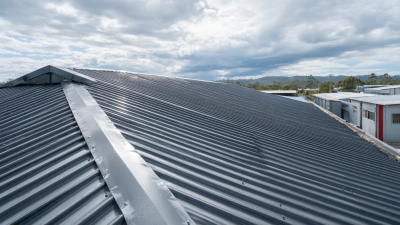
Choosing the right Sheet Roof for global sourcing requires more than comparing prices. It demands practical field experience, technical judgment, and careful supplier verification. Climate, building use, transport distance, and installation skills all affect the final result. A galvanized steel panel may perform well near a dry inland warehouse, yet fail early in a humid coastal environment without suitable coating protection. Small details matter. Even fasteners can decide service life.
Rob Haddock, a recognized metal-roofing specialist and founder of the Metal Roof Advisory Group, offers a useful warning: “The cheapest roof is rarely the lowest-cost roof.” His point remains relevant when evaluating Sheet Roof suppliers across borders. Buyers should examine coating specifications, steel thickness, profile strength, drainage design, warranties, and testing records. They should also request production samples before placing large orders. A polished catalog proves very little. Factory consistency matters more.
Global sourcing is not perfectly predictable. Freight delays happen. Specifications can be misunderstood. A supplier may also provide attractive samples but inconsistent production batches. That risk deserves honest attention. Compare suppliers using the same technical checklist, not only the same quotation form. Confirm packaging, inspection procedures, replacement policies, and communication standards in writing. Local building requirements must also be reviewed by qualified professionals. The strongest choice balances durability, verified quality, total landed cost, and realistic installation conditions. Cheap is tempting. Reliable is harder to measure. That is where disciplined sourcing becomes essential.
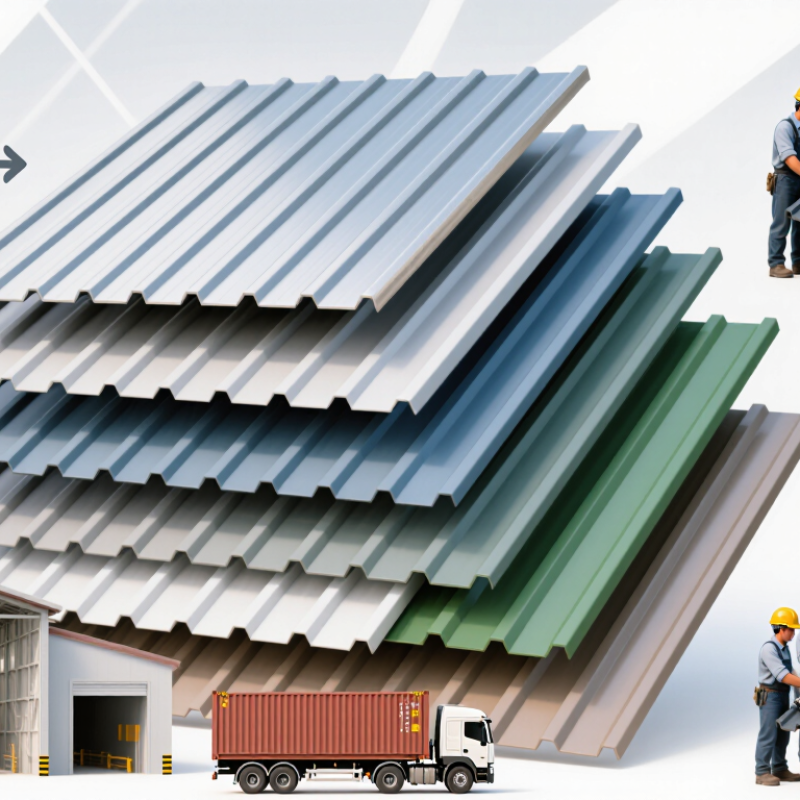
Sheet roofing is not one product. It describes roof panels made from steel, aluminum, fiber cement, or polycarbonate. Each type serves different building conditions and sourcing goals.
Corrugated galvanized steel offers strength, low cost, and simple installation. It suits warehouses, farm buildings, and housing in many regions. However, coastal salt can damage exposed metal without suitable coating. Standing seam steel panels provide cleaner lines and better water management. They work well on commercial buildings and high-rainfall sites. Aluminum resists corrosion and weighs less, but its price and thermal movement require careful planning.
Fiber-cement sheets provide fire resistance and useful sound control. They appear on industrial buildings and low-rise housing, but they need careful handling because edges can crack. Polycarbonate sheets transmit daylight through factories, markets, and covered walkways. They reduce daytime lighting demand, yet heat buildup may become uncomfortable in tropical climates. Small details matter.
Global sourcing requires more than comparing unit prices. Buyers should confirm thickness, coating weight, panel length, fastener compatibility, packaging, and replacement availability. Roof pitch must match the local rainfall and wind conditions. Snow regions need stronger load calculations. Tropical regions need ventilation and secure fixing. A supplier’s test reports should be checked against recognized local or international standards. Samples can reveal coating defects, sharp edges, and misleading color differences. No sheet type wins everywhere. A cheaper panel may create higher installation and maintenance costs. That lesson is easy to miss.
How to Choose Sheet Roof for Global Sourcing?
Climate should shape every roofing decision. In humid regions, select sheets with strong corrosion resistance and reliable protective coatings. Coastal projects need extra attention because salt air attacks exposed edges and fasteners. Areas with intense sunlight require stable finishes that resist ultraviolet damage. Heavy rain also affects lap design, drainage capacity, and installation accuracy. A small mistake at the overlap can create leaks within one season.
Building use changes the specification. A warehouse may need wide spans, impact resistance, and simple maintenance. A livestock building needs ventilation and controlled condensation. Offices and homes usually require better thermal and acoustic performance. Insulated panels may reduce indoor temperature swings, but their added weight affects the supporting structure. Fire performance should match the building’s use and local regulations. These details are often underestimated.
Check structural requirements before comparing prices. Confirm span, purlin spacing, wind uplift, snow load, and expected service life with a qualified local engineer. Sheet thickness alone does not prove strength. Profiles, support spacing, fastener placement, and installation quality matter too. Request technical data, test reports, tolerances, and packaging details from each supplier. A clean sample can look convincing, yet production consistency may vary. That assumption deserves challenge. Compare samples with the approved specification, and inspect delivered sheets before installation.
Assess climate, building use, and structural requirements before selecting a roofing material.
Use corrosion-resistant coatings or aluminum in humid, coastal, and high-rainfall areas. Consider solar reflectance and insulation for hot climates.
Lightweight metal sheets suit warehouses and low-rise buildings, while fiber-cement sheets can provide greater mass and sound attenuation for some occupancies.
Lower sheet mass reduces dead load, but purlin spacing, wind uplift, snow load, fasteners, and local building codes must be checked by a qualified engineer.
Chart values show representative typical sheet-mass ranges used for early-stage sourcing comparisons: coated steel 5–12 kg/m², aluminum 2.5–5.5 kg/m², and fiber-cement 12–18 kg/m². Actual values vary by profile, thickness, coating, and reinforcement.
For global sourcing, sheet roof selection should begin with climate, not price. Galvanized steel offers strong structural value and broad availability. Aluminum resists coastal corrosion but costs more and expands noticeably with temperature. Stainless steel performs well in severe environments, yet its higher material cost can challenge large projects. The International Energy Agency reports that buildings account for about 30% of global energy demand, making roof reflectance relevant to operating costs.
Coating choice changes performance. A high-reflectance finish can reduce surface temperatures and cooling loads. The U.S. Department of Energy reports that cool roofs may reduce peak cooling demand by 10–30% in air-conditioned buildings. However, reflectance declines as dirt, chalking, and oxidation build up. A factory-applied fluoropolymer coating may provide stronger color and weather resistance than basic polyester, but specifications must state coating thickness, substrate mass, and testing methods.
Do not accept “weatherproof” as technical evidence.
Durability depends on installation details too. ISO 12944 corrosion categories help match protection systems to exposure conditions, while ASTM B117 salt-spray results should not be treated as direct service-life predictions. Maintenance should include fastener checks, blocked drainage, scratches, and cut-edge corrosion. It is easy to overlook these small defects. A sourcing team should request test reports, warranty limits, repair procedures, and regional compliance documents.
A low purchase price may become expensive after repeated recoating or premature replacement. My practical view is imperfect but useful: compare total ownership cost over 20 years, not only the delivered sheet price.
International standards should guide your first comparison. Ask suppliers for product certificates, test reports, and factory quality records. Check thickness, coating weight, tensile strength, fire performance, and wind resistance. Requirements differ between regions, so a familiar certificate may not satisfy your destination market. Request samples before approving a large order. Measure the sheet with a micrometer. Inspect edges, surface scratches, color consistency, and protective film adhesion. Small defects often become expensive complaints later. I would also confirm tolerances in writing. Verbal promises are weak evidence.
Supplier evaluation needs more than a low quotation. Review production capacity, inspection procedures, export experience, and response speed. Ask for recent project references, but verify them independently. A video call can reveal storage conditions, machinery, and packaging practices. Poor indoor storage may cause moisture stains before loading. Cost comparisons should include tooling, testing, inland transport, duties, insurance, and handling fees. The cheapest factory price may not produce the lowest landed cost. It is an easy mistake.
Shipping details deserve equal attention. Confirm sheet lengths, bundle weight, container loading plans, and moisture protection. Use clear Incoterms and define responsibility for damage. Request packing photos before shipment. Check commercial invoices, packing lists, certificates of origin, and customs descriptions carefully. Long sheets can waste container space when dimensions are poorly planned. Lead times also change during seasonal demand. Build a buffer. Even a careful plan can fail when ports delay cargo or raw material prices suddenly rise. That possibility should shape the purchase decision.
How to Choose Sheet Roof for Global Sourcing?
Select the Best Sheet Roof Through Testing and Supplier Evaluation
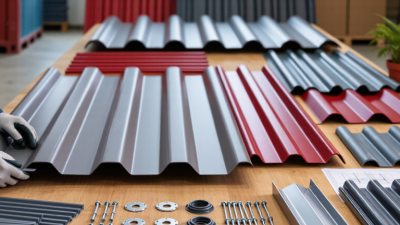
A reliable sheet roof begins with measurable performance, not attractive photographs. Request samples with the exact thickness, coating, profile, and fasteners planned for production. Check dimensions with a micrometer. Inspect cut edges for burrs, uneven coating, or early corrosion. Small defects can become expensive failures.
Test panels under realistic conditions. Compare water leakage after repeated rain exposure and inspect joints after thermal cycling. Ask for wind-load data supported by recognized standards, such as ASTM or EN methods. Salt-spray testing can reveal coating weaknesses, but it cannot represent every climate. This limitation matters. A laboratory result is useful, not absolute.
Evaluate the supplier as carefully as the product. Review quality-control records, material certificates, batch traceability, and corrective-action reports. A factory visit should include the forming line, coating area, storage zone, and final inspection station. Speak with technical staff, not only sales representatives. Their answers often expose process knowledge.
Ask for a pilot order before committing to large volumes. Measure the first shipment again. Packaging damage, color variation, or inconsistent hole positions may appear during transport. One overlooked detail remains a common sourcing mistake. Supplier capacity should also match your schedule, including backup equipment and trained operators. Do not accept vague promises. Require clear tolerances, inspection steps, and written responsibility for nonconforming goods. Yet even a careful evaluation can miss seasonal changes in raw-material quality, so periodic retesting is sensible.
Practical sourcing scorecard for comparing sheet-roof materials, testing performance, compliance, and supplier capability
| Evaluation Category | Data Dimension | Recommended Target or Requirement | Test or Verification Method | Why It Matters for Global Sourcing | Suggested Weight | Priority |
|---|---|---|---|---|---|---|
| 1. Product Specification and Structural Performance | ||||||
| Material | Base metal type | Hot-dip galvanized steel, aluminum-zinc-coated steel, aluminum, or equivalent specification clearly stated | Review material certificates and verify grade and coating designation with an independent laboratory | Confirms that the supplied sheet matches the design basis and local building requirements | 8% | High |
| Material | Nominal thickness | Common roofing range: approximately 0.40–0.90 mm, selected according to span, load, and profile | Measure at several points with a calibrated micrometer, excluding coating where required by the specification | Thickness affects load capacity, handling strength, fastener performance, and total material cost | 8% | High |
| Structure | Yield strength and tensile strength | Must meet the agreed steel or aluminum grade; use the project design value rather than a generic minimum | Tensile test according to ASTM E8/E8M, ISO 6892-1, or an equivalent national standard | Prevents under-strength sheets from being used in roofs exposed to wind, snow, or maintenance loads | 9% | High |
| Structure | Profile geometry and effective cover width | Profile height, pitch, overlap, and cover width must remain within approved drawing tolerances | Check a sample against technical drawings using a profile gauge, steel rule, and calibrated measuring tools | Incorrect geometry can cause leakage, installation delays, and incompatibility with purlins or accessories | 8% | High |
| Structure | Wind-load and span capacity | Published load table or engineer-approved calculation for the actual span, support spacing, and fastening pattern | Review structural calculations; conduct load testing where required by the project or local code | Roof performance depends on the complete system, not only on sheet thickness | 10% | High |
| 2. Corrosion Resistance and Surface Protection | ||||||
| Corrosion | Metallic coating mass or thickness | Use the project class; common coated-steel specifications may range from approximately 100 to 275 g/m² total coating mass | Use a coating-thickness gauge or chemical stripping method according to ASTM A90/A90M, ISO 1460, or the agreed standard | Coating quantity is a major indicator of expected durability in humid, coastal, or industrial environments | 9% | High |
| Coating | Paint system and dry-film thickness | Primer and topcoat type, color, gloss, and total dry-film thickness must be specified before production | Verify coating documentation and measure dry-film thickness according to ASTM D7091 or ISO 2808 | Ensures consistent appearance and helps match the expected service environment | 7% | High |
| Coating | Adhesion and flexibility | No significant cracking, flaking, or delamination after forming and adhesion testing | Cross-cut adhesion according to ISO 2409 or ASTM D3359; bend test according to the agreed coating specification | Detects coatings that may fail during roll forming, cutting, folding, or installation | 7% | High |
| Corrosion | Accelerated corrosion resistance | Pass project-defined exposure duration with acceptable red rust, blistering, and edge creep limits | Neutral salt spray according to ASTM B117 or ISO 9227; interpret results using the agreed acceptance criteria | Useful for comparative screening, but it should not be treated as a direct prediction of outdoor service life | 6% | Medium |
| 3. Weather Tightness, Fire, and Environmental Performance | ||||||
| Weather | Water penetration and joint tightness | No leakage through sheet laps, fastener points, or sealed joints under the project test condition | Water spray or hydrostatic testing based on the applicable roof-system standard and installation details | Joint design and installation often determine water resistance more than the sheet alone | 8% | High |
| Weather | Thermal expansion allowance | Movement joints, fastener type, and fixing pattern must suit sheet length, base material, and climate | Review installation drawings and calculate movement using the material's published thermal expansion coefficient | Reduces oil canning, fastener stress, joint opening, and noise caused by temperature changes | 5% | Medium |
| Fire | Reaction-to-fire classification | Meet the local building-code classification for the roof assembly, including insulation and membranes where applicable | Request a valid fire-test report for the complete assembly under the required local or international standard | Fire classification applies to the assembled roof system and cannot always be inferred from the metal sheet alone | 7% | High |
| Environment | UV and color stability | Color and gloss change must remain within the project acceptance limit after the defined exposure period | Accelerated weathering according to ISO 16474 or ASTM G154/G155, with color measurement using a spectrophotometer | Important for visible roofs where appearance and long-term color consistency affect acceptance | 4% | Medium |
| 4. Manufacturing Quality and Delivery Control | ||||||
| Quality | Dimensional tolerance | Width, length, thickness, camber, and profile dimensions must comply with the approved specification | Perform incoming inspection using a sampling plan such as ISO 2859-1 or an agreed AQL procedure | Controls installation fit, sheet alignment, overlap consistency, and waste at the job site | 6% | High |
| Quality | Surface appearance | No visible blistering, peeling, bare spots, excessive scratches, oil canning, or edge damage | Visual inspection under consistent lighting, supported by agreed defect reference samples | Creates objective acceptance criteria and reduces disputes between buyer and supplier | 4% | Medium |
| Packaging | Export packaging and moisture protection | Use dry, ventilated, edge-protected packaging with lifting points and clear bundle identification | Review packaging specification and inspect a trial shipment or pre-shipment packing photographs | Protects sheets from transit scratches, water staining, deformation, and mixed-bundle errors | 4% | High |
| Delivery | Lead time and production capacity | Capacity and production schedule must support the required order quantity, shipment window, and repeat orders | Compare confirmed capacity, historical delivery records, production plan, and contingency arrangements | Reduces project delays and supply interruptions during multi-country sourcing | 5% | High |
| 5. Supplier Evaluation and Commercial Risk | ||||||
| Supplier | Quality management system | Documented inspection procedures, calibration records, nonconformance control, and traceability | Conduct a remote or on-site audit and review quality records from recent production batches | A reliable process is more valuable than a single successful sample | 5% | High |
| Supplier | Traceability of raw material and coating batch | Each bundle should be linked to a production order, coil number, material certificate, and inspection record | Perform a document-to-product traceability exercise during supplier evaluation | Supports root-cause analysis, warranty claims, and controlled replacement of affected batches | 4% | High |
| Supplier | Testing capability and independent verification | Routine in-house checks plus access to an independent laboratory for disputed or critical results | Review laboratory equipment, calibration status, test reports, and third-party verification process | Improves confidence when buyer and supplier operate under different national standards | 4% | High |
| Commercial | Total landed cost | Compare material, forming, accessories, packaging, freight, duties, inspection, wastage, and installation compatibility | Prepare a landed-cost model using the same Incoterm, quantity, destination, and payment assumptions | The lowest unit price may create higher costs through defects, rework, freight, or short service life | 6% | High |
| Commercial | Warranty and corrective-action response | Written warranty scope, exclusions, claim evidence requirements, response time, and corrective-action procedure | Review contract terms and request examples of completed corrective-action reports | Clarifies responsibility for coating failure, leakage, dimensional defects, and shipment damage | 4% | High |
| Recommended Decision Rule | ||||||
| Scoring | Weighted supplier score | Use a 0–5 score for each dimension and calculate: weighted score = rating ÷ 5 × category weight | Require documented evidence for every score; do not award full points based only on quotations or brochures | Creates a transparent comparison between technically different sheet-roof options | 100% | High |
| Approval | Minimum acceptance threshold | Suggested benchmark: overall score of at least 80/100, with no critical failure in structural, corrosion, fire, or water-tightness tests | Complete document review, sample inspection, independent testing, and supplier audit before mass production | Prevents a high commercial score from compensating for an unacceptable safety or durability risk | Pass/Fail | High |

Note: Target values are practical screening references. Final requirements should be confirmed against the project's structural design, local building code, environmental exposure category, applicable product standard, and approved installation system.