logo
Leave Your Message

China Top 10 Eco-Friendly Roofing Sheets Manufacturers

China’s roofing industry is changing as builders seek lower-impact materials and longer service life. This guide introduces China’s top 10 Eco-Friendly Roofing Sheets manufacturers for informed project planning. It considers product design, recycled content, energy performance, and manufacturing transparency. The review also examines coating quality, corrosion resistance, thermal insulation, and expected maintenance needs. These factors matter in warehouses, rural homes, commercial buildings, and coastal facilities. A roofing sheet is not merely a thin panel. It faces sunlight, rain, wind, temperature changes, and installation pressure for years. Small differences in thickness or surface treatment can affect comfort and replacement costs.

The selection draws on publicly available company information, technical specifications, certifications, market visibility, and practical application evidence. Where possible, it considers measurable details, such as coating layers, panel profiles, warranty terms, and production capacity. Independent standards can strengthen confidence, but certification alone cannot prove every environmental claim. No manufacturer is perfect. Some product data remains incomplete, and marketing language may sound greener than the available evidence. That uncertainty deserves attention. Readers should verify current certificates, test reports, delivery records, and local building requirements before choosing a supplier. This comparison aims to support careful decisions, not promote one universal solution. A reflective approach is essential because the most sustainable sheet depends on climate, building use, installation quality, and service life. In practice, a durable roof that performs well for decades may reduce waste more effectively than a cheaper product with an attractive label.
China Top 10 Eco-Friendly Roofing Sheets Manufacturers

What Are Eco-Friendly Roofing Sheets?

Eco-friendly roofing sheets reduce environmental impact across their entire service life. They may contain recycled steel, aluminum, or mineral fibers. Some are also recyclable after removal. Material origin matters, but durability matters just as much. A sheet that lasts longer can reduce replacement waste and transport emissions. The UNEP 2023 Global Status Report for Buildings and Construction found that buildings produced 37% of global energy-related emissions in 2022. Roofing choices therefore deserve practical attention, not only attractive environmental claims.

Reflective roofing sheets can lower surface temperatures and reduce cooling demand. The U.S. Department of Energy reports that cool roofs may remain over 50°F cooler than conventional roofs under strong sunlight. Results depend on insulation, climate, roof shape, and ventilation. Recycled content alone does not prove sustainability. Manufacturing energy, protective coatings, repairability, and end-of-life recovery should also be checked. Some “green” sheets perform poorly when installed without suitable insulation. That is an uncomfortable but necessary point.

Tips: Ask for recycled-content evidence, service-life testing, and recycling instructions. Check solar reflectance and thermal emittance values. Inspect fasteners and overlap details carefully. Poor installation can cancel material benefits. Local climate should guide the final choice. A low-carbon sheet may still require more maintenance than expected. Review the full life cycle before purchasing.
How China’s Leading Manufacturers Are Evaluated

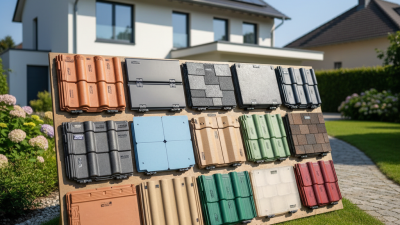
China’s top eco-friendly roofing sheet manufacturers should be judged by evidence, not attractive product photos. A reliable evaluation begins with material composition, recycled content, and production controls. Auditors should review factory records, laboratory reports, and batch traceability. These details show whether environmental claims remain consistent during large orders.

Performance also matters. Inspectors can compare thermal insulation, corrosion resistance, fire behavior, water absorption, and service life. Independent testing is more convincing than an internal brochure. Factory experience should include completed projects in similar climates. A coastal roof, for example, needs different protection from a dry inland warehouse. Certifications may support credibility, but certificates alone do not prove every product performs well. That is an easy mistake.

Tips: Request recent test reports and inspect sample edges for uneven coatings, pinholes, or weak cores. Ask how production waste is collected and reused. Confirm warranty terms, installation guidance, and replacement procedures in writing. Speak with previous buyers when possible. Keep the questions specific.

Evaluation should also consider worker safety, energy use, packaging, and transport efficiency. Manufacturers with clear environmental data are easier to trust. Still, no supplier is perfect. Some factories publish limited lifecycle information, while buyers may overlook installation quality. A strong assessment records both strengths and gaps before selecting a supplier.

How China’s Leading Eco-Friendly Roofing Sheet Manufacturers Are Evaluated

This framework uses common procurement criteria for sustainable roofing sheets. The percentages are indicative evaluation weights and do not represent any individual company or brand.

Environmental performance is assessed alongside technical durability, production transparency, and long-term value. Recycled content, product life, energy efficiency, and verifiable certifications are commonly reviewed during supplier qualification.

Top 10 Eco-Friendly Roofing Sheets Manufacturers in China

Top 10 Eco-Friendly Roofing Sheets Manufacturers in China

This guide reviews ten leading eco-friendly roofing sheet manufacturers in China. The selection focuses on measurable production practices, not advertising claims. Recycled steel content, low-VOC coatings, thermal performance, and factory quality controls matter most. Some manufacturers also produce sheets from recyclable aluminum, fiber cement, or coated steel. These materials can reduce replacement frequency and construction waste.

In practical sourcing, sample testing reveals more than a catalog. Check sheet thickness, coating adhesion, edge finish, and water drainage performance. A good supplier should provide material certificates, testing records, and clear warranty terms. Several Chinese manufacturers use solar power, closed-loop water systems, and recyclable packaging. These details can lower a project’s environmental impact. They also support more consistent production.

No ranking is perfect. Regional delivery distance can change the real carbon footprint. A lightweight sheet may reduce transport emissions but perform poorly under strong wind. That trade-off deserves attention. Buyers should inspect production lines when possible, compare independent test results, and request small trial orders. The most reliable manufacturer is not always the cheapest. Sometimes, the eco-friendly choice needs better maintenance planning.

China Top 10 Eco-Friendly Roofing Sheets Manufacturers - Top 10 Eco-Friendly Roofing Sheets Manufacturers in China

Rank Anonymous Manufacturer Profile Main Production Region Primary Eco-Friendly Roofing Products Recyclable Material Options Typical Service Life Applicable Standards Common Export Markets Environmental Features
1 Profile A — Large-scale coated sheet producer Jiangsu Pre-painted steel roofing sheets, aluminum-zinc coated sheets Steel and aluminum-zinc coated steel 20–30 years, depending on coating and exposure GB/T 12754, GB/T 14978, ASTM A755/A755M Southeast Asia, Africa, Middle East High recycled-metal potential, low-maintenance coatings, long replacement cycle
2 Profile B — Fiber-cement roofing specialist Zhejiang Fiber-cement corrugated sheets, non-asbestos roofing panels Mineral fiber and cement-based materials 25–40 years in suitable applications GB/T 9772, ISO 8336 South Asia, Africa, Latin America Asbestos-free formulations, fire resistance, thermal stability
3 Profile C — Recycled polymer roofing manufacturer Guangdong Synthetic resin tiles, recycled polymer roof panels Recycled PVC, ASA-coated resin, composite polymers 15–25 years, depending on UV exposure GB/T 11718, GB/T 8814, relevant fire-rating tests Southeast Asia, Pacific Islands, Africa Low weight, corrosion resistance, reduced transport emissions
4 Profile D — Stone-coated metal roofing producer Shandong Stone-coated steel tiles, interlocking metal roof panels Galvanized or aluminum-zinc coated steel 30–50 years with proper installation GB/T 12754, ASTM A792/A792M, ISO 9001 systems Oceania, Africa, Middle East Recyclable steel core, lightweight structure, high wind resistance
5 Profile E — Polycarbonate daylight roofing producer Fujian Multi-wall polycarbonate sheets, translucent roofing panels Polycarbonate with UV-protective layers 10–20 years, depending on UV protection GB/T 24127, EN 16153, ASTM D3935 Europe, Southeast Asia, North America Natural daylighting, reduced daytime lighting demand, low structural load
6 Profile F — Corrugated metal sheet manufacturer Hebei Galvanized steel sheets, pre-painted corrugated roofing Recyclable galvanized and pre-painted steel 15–30 years, based on coating class GB/T 2518, GB/T 12754, ASTM A653/A653M Central Asia, Africa, Middle East High recyclability, efficient roll-forming, low installation waste
7 Profile G — ASA-coated synthetic tile producer Sichuan ASA synthetic resin tiles, PVC composite roof sheets PVC or polymer composite materials 15–25 years in normal outdoor conditions GB/T 11718, GB 8624 fire-performance classification Southeast Asia, South America, Africa High corrosion resistance, noise reduction, lightweight construction
8 Profile H — Aluminum roofing sheet producer Henan Aluminum roofing sheets, standing-seam roof panels Recyclable aluminum alloys 30–50 years with suitable alloy and coating GB/T 3880, ASTM B209, EN 485 Europe, North America, Middle East Excellent recyclability, low corrosion risk, low structural weight
9 Profile I — Sandwich roofing panel manufacturer Anhui Insulated metal roof panels, fire-rated sandwich panels Steel skins with mineral wool or PIR cores 25–40 years for the metal envelope GB/T 23932, GB 8624, EN 14509 Asia, Eastern Europe, Africa Improved thermal insulation, reduced operational energy use, prefabricated installation
10 Profile J — Magnesium oxide roofing panel producer Hubei Magnesium oxide panels, mineral-based roofing boards Magnesium oxide, mineral fillers, reinforcing fibers 15–30 years, subject to moisture protection GB/T 9775, GB 8624, applicable moisture and fire tests Southeast Asia, Africa, South America Mineral-based composition, fire resistance, low VOC potential

Note: Product life, standards, and environmental performance depend on the exact material formulation, coating system, climate, installation method, and project specifications.

Materials, Technologies, and Environmental Standards

China Top 10 Eco-Friendly Roofing Sheets Manufacturers: Materials, Technologies, and Environmental Standards

Eco-friendly roofing begins with material selection, not marketing language. Leading Chinese manufacturers commonly use coated steel, aluminum, fiber cement, and recycled polymers. Each material has trade-offs. Steel offers strength and recyclability, while aluminum resists corrosion but requires energy-intensive production. Fiber cement can reduce metal use, yet its cement content carries a significant carbon burden.

The UNEP GlobalABC 2023 report states that buildings and construction produced about 37% of global energy and process-related CO2 emissions in 2022. Roofing sheets therefore need more than attractive colors. High-reflectance coatings can limit solar heat gain. Insulated profiles can reduce indoor temperature swings. Some factories now use automated roll forming, closed-loop water systems, and powder coatings with lower solvent emissions. The results vary.

Third-party evidence matters. An Environmental Product Declaration should follow ISO 14025 and EN 15804 principles. Life-cycle studies should disclose raw materials, factory energy, transport, use, and end-of-life stages. Chinese buyers can also review GB/T 24025 for environmental declarations, GB 8624 for fire performance, and product standards for coated steel or cement sheets. Certificates alone are not enough. Auditors should check batch records, recycled-content invoices, coating thickness, and corrosion-test results. A recycled claim without traceability remains weak. Real projects also reveal problems that laboratory tests miss, including fastener corrosion, panel distortion, and damaged coatings at cut edges. Manufacturers should report these failures, not hide them.

How to Choose the Right Chinese Manufacturer

Choosing among China’s top 10 eco-friendly roofing sheet manufacturers requires more than comparing online prices. Start with the factory’s production experience, material control, and export record. Ask for the exact substrate, coating type, recycled content, thickness tolerance, and expected service life. A reliable manufacturer should provide clear technical data, not vague promises.

Request physical samples before placing a large order. Check the surface under direct light. Look for uneven coating, exposed edges, or slight warping. Test the sheets for water resistance, color stability, corrosion protection, and thermal performance. Ask for independent laboratory reports, production photos, and quality records linked to the same product specification. Factory audits can reveal storage problems, weak packaging, or inconsistent inspection routines. These details matter during humid transport and installation.

Communication also deserves careful attention. A capable team should explain lead times, minimum order quantities, packing methods, replacement policies, and installation guidance. Confirm whether the quoted price includes testing, export packaging, and required documentation. Do not choose only by the lowest offer. A cheaper sheet may bring higher maintenance costs later. No supplier is perfect. I have seen promising samples hide inconsistent batch quality, so a pre-shipment inspection remains worthwhile. Keep written records of every specification, approval, and correction. That simple habit can prevent expensive misunderstandings.