2026 Top Roofing Tiles Cost Guide for Global Buyers
Planning a roofing project in 2026 requires more than checking a supplier’s catalog price. Roofing Tiles Cost changes with material, region, design, transport distance, and installation complexity. A concrete tile may look affordable in a factory quote, yet freight, underlayment, fasteners, labor, and local taxes can increase the final budget. Small details matter.
This guide helps global buyers compare roofing tile prices with greater confidence. It examines clay, concrete, metal-coated, slate, and recycled composite options. Each material behaves differently under heat, rain, snow, salt air, and strong winds. A coastal warehouse may need different products from a mountain home. Experience on real projects shows that weight can affect structural upgrades and delivery planning.
Reliable pricing begins with clear specifications. Buyers should request product dimensions, coverage per square meter, tile weight, warranty terms, test reports, and estimated breakage rates. Supplier experience also matters. Ask for recent project references and inspect samples under natural light. A glossy sample can hide color variation.
That assumption can fail.
Budget comparisons should include installation waste and maintenance over the roof’s expected service life. Prices may also change with currency movements and seasonal shipping demand. No single global average is fully reliable. This guide offers practical benchmarks, questions for suppliers, and methods for building a realistic landed-cost estimate. Some figures will remain approximate, because local conditions are never identical. Use them as decision tools, not promises.
Roofing Tile Types and Their Best Applications Worldwide
2026 Top Roofing Tiles Cost Guide for Global Buyers
Roofing tile selection should follow climate, structure, and repair access.
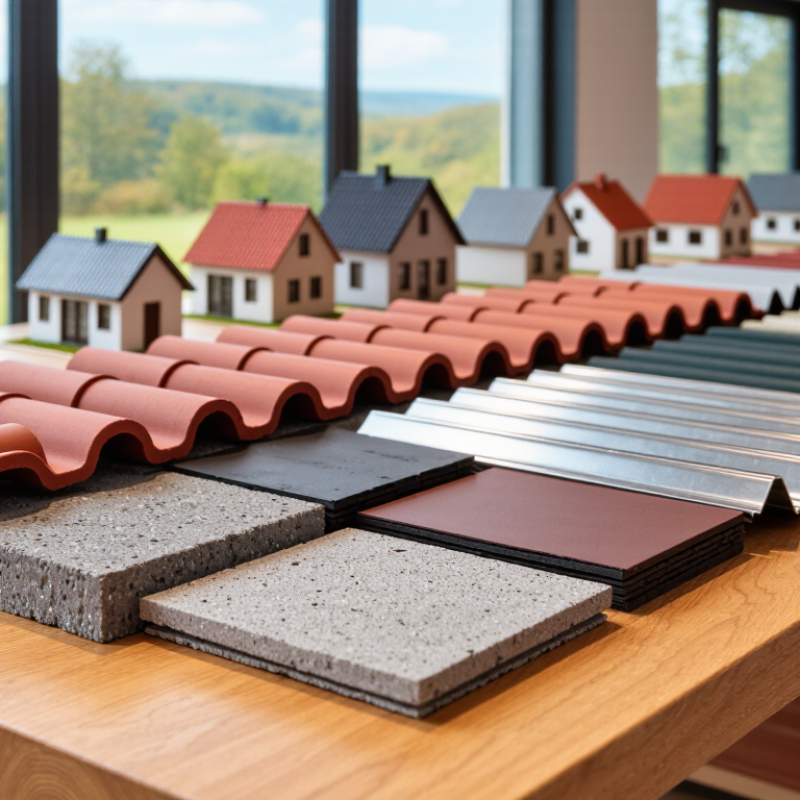
Clay tiles suit hot, dry regions because they resist ultraviolet exposure and release heat slowly. Their warm, uneven surfaces also support traditional Mediterranean and tropical designs. Concrete tiles usually cost less and offer strong wind resistance, but their heavier weight requires careful structural checks. No tile wins everywhere.
Slate performs well in wet, cold climates when the roof structure can carry its weight. Composite tiles can simplify transport and installation in remote markets. Solar-integrated tiles suit new buildings with high electricity demand, although their initial cost remains difficult for many buyers. The GlobalABC and UNEP 2023 Buildings-GSR reported that buildings used 34% of global energy in 2022. Roof color, ventilation, and reflectance therefore matter, not just appearance. Cooling benefits can be real. They are not automatic.
Tips:
Request local wind, rain, fire, and snow-load requirements before comparing prices. Ask suppliers for installation weight, breakage rates, replacement availability, and tested service-life data. The U.S. Department of Energy notes that cool roofs can reduce heat transfer into buildings, especially in warm climates. Yet a reflective roof may bring smaller winter benefits in cold regions. A low-cost tile can become expensive after transport, weak underlayment, or difficult repairs. Recheck the specification. Mistakes happen.
Key Factors That Determine Roofing Tile Costs in 2026
In 2026, roofing tile cost depends on more than the tile itself. RSMeans 2025 Building Construction Cost Data places many installed concrete and clay tile systems around US$10–25 per square foot in the United States. This range is only a planning benchmark. Local labor, roof access, and project scale can change it sharply.
Tile composition matters. Concrete tiles usually cost less than fired clay tiles, while glazed or specialty profiles require more energy and handling. The International Energy Agency reports that industrial heat remains a major energy expense, making kiln-fired products sensitive to gas and electricity prices. Freight adds another layer. The World Bank’s commodity and transport outlooks show that fuel and shipping movements can quickly affect delivered costs. Heavy tiles also need stronger pallets, larger containers, and careful unloading.
Roof geometry is often underestimated. Steep pitches, valleys, dormers, and cutting waste increase labor hours and breakage. Regional codes may require upgraded underlayment, wind clips, or structural reinforcement. Those items can exceed the visible tile cost. Currency exchange and import duties also matter for global buyers. I would compare delivered cost, not factory price. That comparison is imperfect. RSMeans reflects North American conditions, while labor and compliance costs differ widely elsewhere. Requesting a project-specific bill of quantities remains the safer method.
Global Roofing Tile Price Ranges by Material and Region
Global roofing tile prices vary sharply by material, labor market, energy costs, and shipping distance. For 2026 planning, indicative material-only ranges are about USD 4–11 per square meter for concrete tiles in Asia-Pacific and Latin America. European concrete tiles often reach USD 7–16. Clay tiles usually cost USD 6–18 in emerging markets and USD 10–28 in North America and Europe. Natural slate remains the premium option, ranging from USD 20–55 in Latin America to USD 35–90 in North America. These figures exclude installation, battens, underlayment, taxes, breakage, and final-mile delivery.
The ranges synthesize 2025 customs values from UN Comtrade, producer-price trends from the U.S. Bureau of Labor Statistics, and regional construction-cost guidance from RICS. They are benchmarks, not fixed quotations. Port congestion can add USD 2–8 per square meter, while local labor may exceed the tile cost itself. Concrete generally offers the lowest purchase price, but heavier pallets can increase freight charges. Clay needs careful moisture and impact inspection. Slate requires stricter structural checks. A polished spreadsheet can still mislead. Regional data is incomplete, especially across Africa and smaller island markets. Buyers should request landed-cost schedules, sample approvals, pallet weights, and documented breakage allowances before comparing suppliers.
2026 Global Roofing Tile Prices by Material and Region
Indicative roofing tile purchase prices in USD per square metre, excluding installation, underlayment, freight, duties, taxes, and project-specific discounts.
Concrete and clay tiles generally offer the lowest material costs, while slate and polymer-composite products command higher prices because of material quality, durability, processing, and logistics. Actual quotations vary by tile profile, thickness, order volume, and local market conditions.
Installation, Shipping, Maintenance, and Lifecycle Expenses
2026 Top Roofing Tiles Cost Guide for Global Buyers
Installation, Shipping, Maintenance, and Lifecycle Expenses
Roof tile prices are only the starting point. Installation often adds 40% to 100% of the tile purchase cost, depending on roof pitch, access, framing, and local wages. A steep roof needs more safety equipment and skilled labor. Complex valleys also increase cutting and waste. Underlayment, battens, flashing, fasteners, and removal of old materials must appear in the quotation. Labor varies widely. A site inspection gives more reliable figures than online averages.
Shipping requires careful planning. Tiles are heavy and vulnerable to edge damage, so exporters should state pallet dimensions, gross weight, loading method, and replacement terms. Buyers must check freight, insurance, port handling, customs duties, and inland delivery separately. In some regions, local taxes can exceed the ocean freight charge. One cracked pallet can disrupt an entire installation.
Maintenance is usually modest but never zero. Inspect tiles, ridge lines, flashings, and gutters after severe storms and once each year. Replace cracked pieces quickly; water may reach insulation and timber before stains appear indoors. Over a 30-year lifecycle, cleaning, repairs, access equipment, and occasional underlayment work can exceed the original tile cost. My estimates are not perfect. Climate, workmanship, and roof design can change the result sharply. Request a written lifecycle model, not only a low unit price.
2026 Top Roofing Tiles Cost Guide for Global Buyers - Installation, Shipping, Maintenance, and Lifecycle Expenses
| Roofing Tile Type |
Typical Weight
kg/m² |
Material Cost
USD/m² |
Installation Cost
USD/m² |
Shipping & Handling
USD/m² |
Maintenance Reserve
USD/m²/year |
Expected Service Life |
Estimated 30-Year Lifecycle Cost
USD/m² |
| Concrete Tiles |
35–50 |
$8–18 |
$20–45 |
$4–12 |
$1.00–2.00 |
40–60 years |
$65–140 |
| Clay Tiles |
30–50 |
$15–35 |
$25–55 |
$5–15 |
$1.50–3.00 |
50–100 years |
$90–195 |
| Natural Slate |
25–40 |
$35–100 |
$40–90 |
$8–25 |
$1.50–4.00 |
75–150 years |
$130–335 |
| Stone-Coated Steel Tiles |
5–8 |
$15–35 |
$22–50 |
$2–8 |
$0.80–2.00 |
40–70 years |
$65–155 |
| Standing-Seam Metal Tiles |
4–8 |
$12–30 |
$20–45 |
$2–8 |
$0.80–2.00 |
40–70 years |
$60–145 |
| Composite or Polymer Tiles |
6–12 |
$20–45 |
$25–55 |
$3–10 |
$1.00–2.50 |
40–60 years |
$80–185 |
| Fiber-Cement Tiles |
12–18 |
$10–25 |
$22–48 |
$3–10 |
$1.00–2.50 |
30–50 years |
$65–160 |
Cost assumptions: Figures are indicative 2026 global planning ranges in USD for a standard residential roof and include approximately 5% material waste. Installation costs cover normal labor, fastening, basic underlayment, and standard site access, but exclude structural reinforcement, roof replacement, insulation, complex flashing, scaffolding in difficult locations, and local taxes. Shipping and handling include typical export packaging, ocean freight, port charges, and inland delivery; tariffs, VAT/GST, insurance, and extreme-distance delivery are excluded.
Lifecycle method: Estimated 30-year cost equals material cost + installation cost + shipping and handling + 30 years of maintenance reserves. Actual costs vary by roof pitch, climate, labor rates, order volume, route, exchange rates, and building-code requirements.