China Top 10 Roof Tile Manufacturers for Global Buyers? This question deserves more than a supplier list. It requires evidence, factory experience, and careful comparison. Grand View Research estimated the global roofing materials market at approximately USD 151.26 billion in 2023. Its report also projects steady growth through 2030. However, roofing materials include several product categories, not only Roof Tile. That distinction matters.
China remains a major manufacturing base for ceramic, concrete, and synthetic roofing products. Industry reports from the China Building Materials Federation show strong production capacity across ceramic and construction-material clusters. Yet production volume does not automatically prove export reliability. A buyer should inspect firing consistency, water absorption, frost resistance, color stability, packaging, and replacement availability. Small details become expensive when pallets arrive damaged.
Bill Rose, building scientist and author of Water in Buildings, wrote, “The primary function of a roof is to keep water out of a building.” That simple principle still guides professional evaluation. Roof Tile suppliers should therefore provide test records, technical drawings, installation guidance, and traceable quality controls. Relevant standards may include EN 1304, ASTM C1167, and project-specific national requirements.
This outline compares ten Chinese manufacturers through a global buyer’s lens. It considers product range, certifications, export experience, factory capability, customization, and after-sales support. Rankings are never perfect. Public information can be incomplete, and some manufacturers present stronger marketing than documentation. Buyers should verify every claim independently. A sample inspection, factory audit, and third-party testing remain sensible steps before signing a large order.
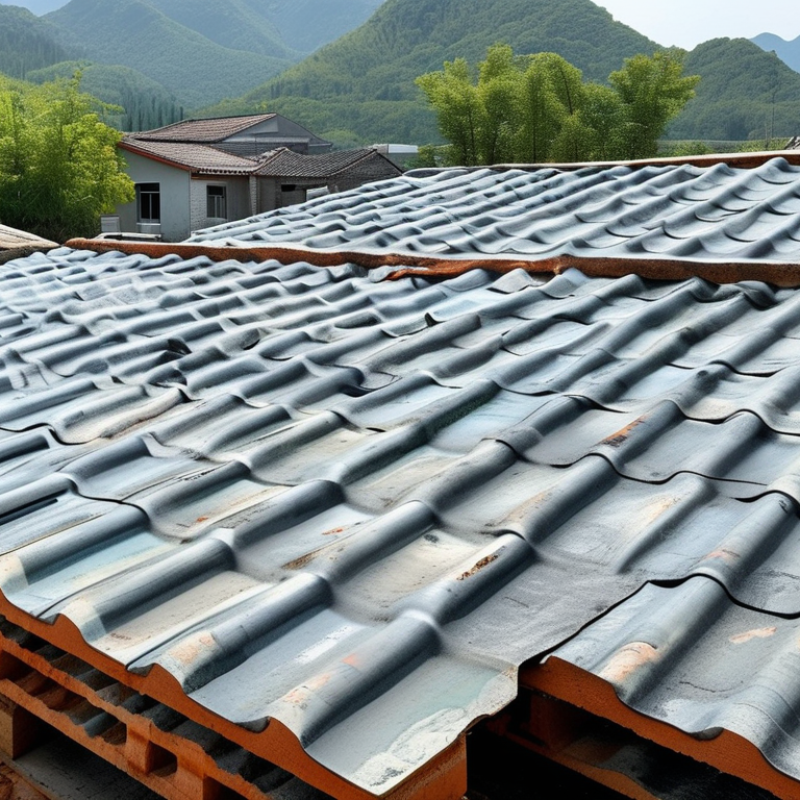
A leading Chinese roof tile manufacturer is defined by more than factory size or export volume. It should control clay selection, forming, firing, glazing, and final inspection. Mordor Intelligence estimates the global roofing market will grow steadily through 2029, increasing pressure on suppliers to deliver consistent products across climates. Quality must survive more than a showroom test.
Reliable manufacturers publish water absorption, breaking strength, frost resistance, and dimensional tolerance data. These indicators align with standards such as EN 1304 and ASTM C1167. A serious supplier also provides batch records, laboratory reports, and traceable samples. Buyers should inspect kiln temperature records and packaging details. Small cracks often begin during loading, not installation. This practical point is easy to miss.
Production scale still matters. A manufacturer serving overseas projects should maintain stable raw-material reserves and backup equipment. It should also understand wind zones, rainfall patterns, and local fixing methods. The U.S. Energy Information Administration reports that buildings consume a significant share of global energy, making thermal performance increasingly relevant. However, thermal claims can be overstated. Ask for test conditions, not attractive percentages.
Experience appears in the details. Can the supplier match replacement tiles after several years? Can it explain color variation honestly? Can it respond when a shipment arrives damaged? A leading manufacturer accepts these uncomfortable questions and improves its process. That is stronger evidence than a polished catalog.
Selecting China’s top ten roof tile manufacturers requires more than checking export volume or factory size. Grand View Research valued the global roofing materials market at approximately USD 151.5 billion in 2023. It also forecasts steady growth through 2030. This demand attracts capable suppliers, but also creates crowded comparisons. A serious shortlist should examine production experience, kiln technology, quality records, and overseas project evidence. Factory visits matter. Website claims do not.
The selection process should begin with measurable evidence. Review annual capacity, tile absorption rates, breaking strength, frost resistance, and dimensional tolerance. Request recent laboratory reports, not outdated samples. For ceramic tiles, EN 1304 or ASTM-related testing can help buyers compare performance across markets. ISO 9001 certification supports process control, but it cannot guarantee every shipment. That distinction is often missed.
Trade reliability also deserves careful scoring. International Trade Centre data shows China remains a major global exporter of ceramic and construction products. Yet export scale alone says little about packaging or after-sales support. Assess container loading photographs, moisture protection, replacement policies, and response times. Ask for three completed projects in comparable climates. Check the details yourself. A supplier may pass a test while delivering inconsistent color batches. That weakness should reduce its ranking, even when pricing looks attractive.
China’s roof-tile sector serves climate zones from coastal typhoons to northern freeze-thaw regions. Grand View Research estimates the global ceramic tiles market will expand at about 6% annually through 2030. That growth raises the value of verified factory profiles, not attractive catalog claims.
The first manufacturer specializes in high-temperature clay tiles, with dense bodies and low water absorption. The second focuses on glazed tiles for villas and heritage-style projects. The third produces lightweight polymer-composite tiles for buildings needing lower structural loads. The fourth supplies concrete tiles, using automated pressing lines and controlled curing. The fifth targets cold regions, testing frost resistance through repeated freeze-thaw cycles.
The sixth makes solar-compatible roofing systems, but installers must confirm ventilation details. The seventh serves large distributors with standardized colors and pallet packing. The eighth offers custom molds for restoration work, where small dimensional errors become obvious. The ninth combines tile production with roof-accessories manufacturing. The tenth emphasizes export documentation, container planning, and replacement-rate control.
Production scale alone proves little. The China Building Materials Federation has repeatedly highlighted energy efficiency and quality consistency as industry priorities. Meanwhile, Mordor Intelligence places the global roofing market above 150 billion US dollars in the mid-2020s, showing why supplier screening matters. Buyers should request test reports, batch records, salt-spray results, and samples from different production dates. A glossy sample can mislead. Color variation, chipped corners, and packaging weakness still appear in real shipments. My assessment may also change after factory audits, because published profiles cannot reveal every kiln, mold, or quality-control gap.
China Top 10 Roof Tile Manufacturers for Global Buyers?
Roof Tile Products, Standards, and Export Capabilities
When comparing China’s top ten roof tile manufacturers, buyers should inspect products, standards, and export readiness together. Ceramic, concrete, and polymer-modified tiles serve different roofing systems. Clay tiles offer color depth and long service life. Concrete tiles provide efficient coverage and broad profile choices. Interlocking designs can reduce installation time. Samples should reveal thickness, edge accuracy, glaze consistency, and water absorption.
Standards make comparisons more reliable. Clay tiles may be tested against EN 1304 or ASTM C1167. Concrete products often follow EN 490 and EN 491, where applicable. Ask for current laboratory reports, production batch records, and test methods. Check freeze-thaw resistance, breaking load, dimensional tolerance, and water impermeability. A certificate alone is not enough. Test scope matters. Local building rules still control final acceptance.
Export capability appears in small details. Experienced factories provide clear specifications, color samples, pallets, corner protection, and container loading plans. They should explain minimum order quantities, lead times, replacement policies, and documentation. Request loading photos, not only polished catalog images. In practical sourcing reviews, packaging is often underestimated. One cracked pallet can damage an otherwise strong shipment. No supplier is perfect. A factory may offer excellent tiles but weak communication, or fast delivery with limited custom profiles. Buyers should record these gaps before signing a purchase agreement.
Anonymized supplier comparison based on commonly documented Chinese roof-tile product categories, international standards, and export practices.
| Rank | Anonymous Manufacturer Profile | Main Production Region | Core Roof Tile Products | Typical Materials & Finishes | Common Product Standards | Quality & Testing Capability | Export Markets | Indicative MOQ | Typical Lead Time | Export & Customization Strengths |
|---|---|---|---|---|---|---|---|---|---|---|
| 1 | Profile A — Large-scale ceramic tile producer | Foshan, Guangdong | Flat tiles, Spanish tiles, Roman tiles, accessories | Sintered clay, glazed, engobe, matte and antique finishes | EN 1304; ASTM C1167 specifications where required; project-specific buyer standards | Water absorption, breaking load, dimensional checks, frost-resistance testing by specification | Europe, Middle East, Southeast Asia, Africa, Australia | 1 × 20-foot container | 25–45 days | High-volume container loading, color matching, packaging design and private-label cartons |
| 2 | Profile B — Architectural clay tile specialist | Jingdezhen, Jiangxi | Traditional curved tiles, flat interlocking tiles, ridge and hip tiles | Natural clay, red body, weathered, glazed and hand-finished surfaces | EN 1304; local building-code requirements; buyer-approved technical drawings | Visual inspection, size tolerance, water absorption and load testing | North America, Europe, Japan, Southeast Asia, heritage-restoration markets | 5,000–10,000 pieces | 30–60 days | Strong custom mold development, historical profiles, sample approval and small-batch color production |
| 3 | Profile C — Concrete interlocking tile manufacturer | Yixing, Jiangsu | Concrete interlocking tiles, low-pitch tiles, ridge systems and fittings | Cement-based concrete, mineral pigments, acrylic-coated and granular finishes | AS 2049/AS 2050 project requirements; ASTM C1492 references; regional standards as specified | Load, absorption, coating adhesion, freeze-thaw and color-retention testing when applicable | Australia, Pacific Islands, Southeast Asia, Africa and selected Middle Eastern markets | 1–2 containers per color | 20–40 days | Efficient palletized shipping, broad color range, matching accessories and roof-system packaging |
| 4 | Profile D — Glazed traditional tile producer | Foshan, Guangdong | Glazed Chinese tiles, barrel tiles, eave tiles, decorative ridge pieces | Ceramic clay with high-temperature glaze, semi-gloss and antique finishes | EN 1304; ISO 10545 test methods commonly used for ceramic performance evaluation | Water absorption, glaze surface inspection, dimensional consistency and thermal-shock checks | East Asia, Southeast Asia, North America, Europe and cultural architecture projects | 3,000–8,000 pieces | 35–65 days | Custom glaze development, decorative components, export crating and project-based sampling |
| 5 | Profile E — High-volume concrete roof-system supplier | Chengdu, Sichuan | Concrete tiles, solar-compatible roof tiles, ridge caps and ventilation fittings | Pressed concrete, polymer-modified coatings, colored mineral granules | Local concrete tile standards; AS 2049/AS 2050 or ASTM-based specifications for export projects | Breaking load, water absorption, coating thickness, weathering and dimensional tests | Southeast Asia, Central Asia, Africa, Middle East and Latin America | 1 × 40-foot container | 25–50 days | Integrated accessories, bulk-order pricing, roof layout support and export palletization |
| 6 | Profile F — Flat ceramic tile and façade specialist | Foshan, Guangdong | Flat clay tiles, slim-format tiles, ventilated roof tiles and matching trim | Extruded clay, natural, engobed, matt-glazed and textured finishes | EN 1304; project-specific wind, frost and fire-performance requirements | Dimensional tolerance, water absorption, frost resistance and mechanical strength testing | Europe, Canada, Australia, Southeast Asia and premium residential markets | 5,000–15,000 pieces | 30–55 days | Modern profiles, color consistency, technical drawings and customized carton labeling |
| 7 | Profile G — Heritage and landscaping tile producer | Yixing, Jiangsu | Small-format tiles, antique tiles, garden roofing tiles and decorative components | Unglazed clay, smoked finishes, weathered surfaces and hand-aged textures | EN 1304 or buyer-defined specifications; project documentation supplied on request | Batch color inspection, water absorption, size checks and sample-based strength testing | Europe, North America, Japan, Korea and boutique construction markets | 2,000–6,000 pieces | 35–70 days | Suitable for restoration work, custom aging, mixed-size orders and protective export crating |
| 8 | Profile H — OEM roof tile and accessory factory | Linyi, Shandong | Concrete tiles, ceramic tiles, ridge caps, verge units and roof ventilation accessories | Concrete, clay, coated surfaces and weather-resistant color systems | ASTM, EN, AS/NZS or destination-market specifications selected by the buyer | Pre-shipment inspection, third-party laboratory coordination and batch traceability | Africa, Middle East, Southeast Asia, Latin America and private-label distributors | 1 container; smaller trial orders negotiable | 20–45 days | Flexible OEM packaging, mixed-container loading, logo-free products and buyer-specific molds |
| 9 | Profile I — Premium glazed and colored ceramic supplier | Foshan, Guangdong | Glazed flat tiles, interlocking ceramic tiles, curved tiles and ridge accessories | High-fired clay, glossy glaze, satin glaze, granular and multi-tone finishes | EN 1304; ISO 10545 methods for selected ceramic testing; destination-code compliance | Glaze consistency, water absorption, breaking strength, frost and thermal-shock testing | Europe, North America, Middle East, Southeast Asia and luxury housing projects | 3,000–10,000 pieces | 40–75 days | Premium sampling, custom color development, coordinated accessories and project documentation |
| 10 | Profile J — Regional mixed-product roof tile exporter | Chengdu, Sichuan | Clay tiles, concrete tiles, ridge caps, eave tiles and roof accessories | Natural clay, colored concrete, glazed and coated finishes | EN, ASTM, AS/NZS or local-market standards according to contract requirements | Incoming-material checks, finished-product inspection, loading supervision and sample testing | Central Asia, Africa, Southeast Asia, Middle East and Latin America | 1 × 20-foot container | 25–50 days | Competitive mixed-product sourcing, flexible consolidation, export documents and buyer-specific packing |
China’s roof tile sector offers many capable factories, but a “top 10” list should not rely on production volume alone. Mordor Intelligence estimates the global roofing market at about USD 151.8 billion in 2024, with continued growth through 2029. That scale attracts both disciplined exporters and inconsistent suppliers. Global buyers should compare factory evidence, not polished catalogues.
Ask each supplier for recent test reports covering water absorption, breaking strength, frost resistance, and dimensional tolerance. EN 1304 and ISO 10545 provide useful reference points for ceramic roofing products. For clay tiles, lower water absorption can reduce freeze-thaw damage, but the correct threshold depends on the installation climate. Request samples from normal production, not specially selected pieces. Inspect the underside, edge straightness, glaze consistency, and pallet protection. Small details matter.
Production capacity needs careful checking. A factory may quote annual output, yet export experience can be limited. Review the last twelve months of inspection records, container loading photographs, and batch traceability documents. UN Comtrade data can help buyers compare China’s roof tile export patterns by HS code, although trade codes may combine different product types. Landed cost should include tiles, packaging, inland transport, ocean freight, duties, breakage allowance, and replacement lead time. The cheapest quotation is often incomplete. A spreadsheet can still mislead. Conduct a video audit, then arrange an independent pre-shipment inspection. Keep payment stages tied to measurable quality requirements.
How Global Buyers Can Compare and Choose a Supplier
This buyer-defined evaluation framework assigns a 100-point weighting to the factors most relevant when comparing roof tile suppliers: compliance documentation, product consistency, export capability, customization, order flexibility, and after-sales support. Buyers can adjust the weighting to match their project requirements.